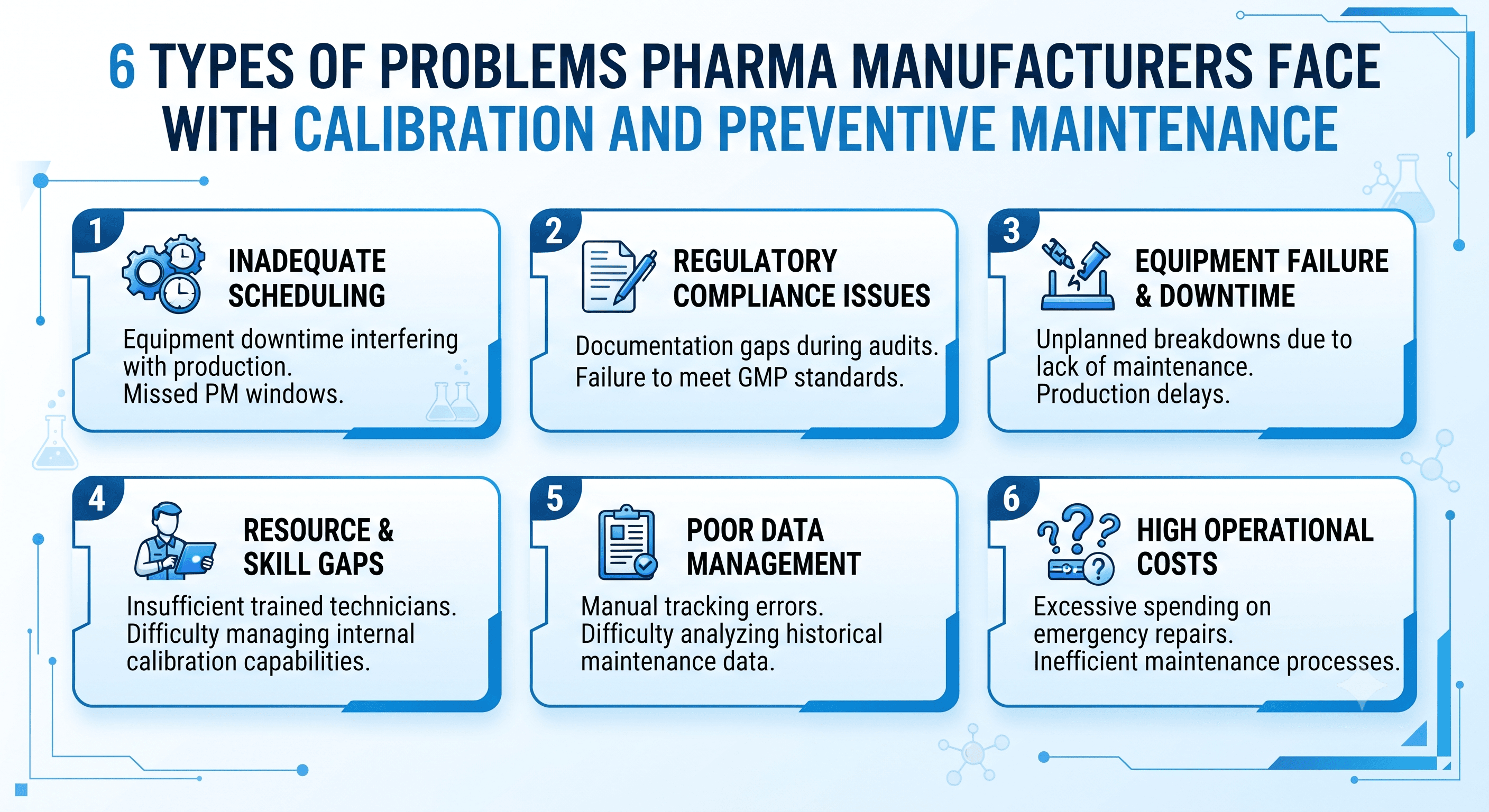
Problem 1: Paper and Spreadsheets Are Still Running the Show
It's honestly surprising how many facilities are still tracking calibration schedules and maintenance logs on paper, or worse, spread across five different laptops in five different formats. The same issues keep cropping up:
Entries get missed, misfiled, or logged late
Old data is a pain to search or compare against
Technicians spend more time filling out forms than actually maintaining equipment
Transcription mistakes creep in and surface right when an audit happens
Paper-based tracking worked when nobody was looking too closely. That era is over.
Where CAPS fits in: CAPS replaces paper logs with digital checklists and mobile-friendly screens technicians can use directly on the shop floor. Activity gets recorded in the system the moment it happens, so transcription errors drop and hours that used to disappear into paperwork get freed up for actual work.
Problem 2: Audit Readiness Has Holes in It
Auditors, whether from the FDA, EU GMP, or WHO, all want the same basic thing: complete, verifiable, time-stamped records for every piece of equipment, with no gaps anywhere. Sounds simple. In practice, most manufacturers still can't deliver it cleanly.
The reason usually comes down to fragmentation. Calibration data lives in one tool, maintenance logs sit in another, and there's a binder somewhere nobody's touched since the last audit. Without a single calibration tracking system tying it all together, teams end up guessing where to even begin.
You feel this the moment an auditor asks about the calibration history of one specific instrument. What should take two minutes turns into phone calls across departments, someone digging through old spreadsheets, another person checking a shared drive half the team forgot existed. A five-minute ask eats up hours, and by the time anyone finds the record, the auditor has already noticed the scramble.
Where CAPS fits in: The platform maintains a GMP-compliant audit trail with digital signatures aligned to 21 CFR Part 11. As GAMP compliant maintenance software, it logs, timestamps, and traces every maintenance and calibration event. Getting audit-ready becomes a matter of pulling a report instead of rebuilding a paper trail from memory.
Problem 3: Calibrations Get Missed Because Scheduling Is Weak
Poor scheduling is probably the single biggest reason calibration windows slip. Once a calibration gets skipped or pushed back, the equipment keeps running, possibly outside its validated range, and nobody catches it until a batch fails or something breaks down. That's not a minor clerical slip. It's a real compliance risk, and product quality pays for it.
This is exactly the kind of gap a proper calibration management system software setup closes. CAPS tracks the calibration and maintenance frequency assigned to each piece of equipment and generates tasks on its own, so no one has to remember to schedule anything manually. Job orders go out automatically, whether routine or unplanned. If a technician misses the window or doesn't act in time, the system flags a deviation right away. No calendar reminders, no sticky notes, none of that.
Problem 4: There's No Real-Time View of Equipment Health
Plant managers usually learn an instrument drifted out of calibration only after something's already gone wrong, a failed batch, a flagged result, something that shouldn't have happened in the first place. Without real-time visibility, there's no real way to catch drift early or notice patterns forming across an entire fleet of equipment.
CAPS turns that around. Centralized dashboards give managers a live view of equipment status, upcoming maintenance, and compliance gaps across every facility, all in one place. It goes a step further with AI-driven analytics that track performance trends over time and start suggesting maintenance schedules before failures actually happen. That's the real shift: moving away from preventive maintenance that just follows a fixed calendar, toward predictive maintenance that responds to what the equipment is actually showing.
Problem 5: Systems Across the Plant Don't Talk to Each Other
Calibration data, quality events, and production records usually live in separate systems that never communicate. So when an instrument fails calibration, there's often no automatic link back to the batch record or the deviation process. Uncalibrated equipment slips into use, and nobody catches it until it's too late.
CAPS closes that gap by integrating directly with eQMS, LIMS, eBMR/MES, DMS, LMS, and SAP/ERP. Day to day, that looks like this:
If calibration status shows "Expired" or "Failed," LIMS blocks the instrument outright, protecting data integrity
eBMR/MES stays synced with equipment status, so only validated equipment reaches manufacturing
eQMS kicks off deviation and CAPA workflows the moment there's a failure or missed maintenance task
LMS confirms a technician is trained and certified before letting them start a task
This is where maintenance, quality, and production actually connect, and it's exactly where manual, disconnected setups break down.
Problem 6: Emergency Repairs and Downtime Are Getting More Expensive
Reactive maintenance, fixing things only after they break, costs far more than most manufacturers want to admit. Emergency repairs run higher than planned ones almost every time, and unplanned downtime throws off production schedules and delays batch release. For plants already under pressure to hit output targets, this problem doesn't fix itself.
CAPS shifts that balance by pushing operations from reactive toward preventive and predictive maintenance, which naturally reduces how often emergencies happen at all. AmpleLogic's own numbers back this up: 3-5x return on investment, 60% less spent on emergency maintenance, and 45% less unplanned downtime. Catch problems early, schedule around them, and they don't get the chance to snowball.
Why This Matters Right Now
Pharma manufacturing is under more regulatory and commercial pressure than it's seen in years. Auditors want digital, traceable records, no exceptions. Production teams are being asked to hit tighter timelines with fewer disruptions. Quality teams need actual confidence, not a guess, that every piece of equipment used in a batch was calibrated and maintained the way it should have been.
CAPS isn't paper records moved onto a screen. It's built differently from the ground up:
Every calibration and maintenance task runs through a defined, trackable workflow
Deviations trigger automatically instead of surfacing after the fact
Equipment status is visible in real time, not discovered once something's already broken
Data flows across quality, lab, and production systems instead of getting stuck in silos
Whether a facility needs a preventive maintenance system for pharma production lines or a preventive maintenance solution for labs juggling a heavy instrument load, the underlying need is the same: catching problems before they turn into audit findings or production delays.
Final Thoughts
None of this is new, exactly. Missed schedules, audit gaps, reactive repairs, manufacturers have dealt with these for years. What's changed is that manual methods simply can't keep up with the scale and scrutiny modern GMP operations demand anymore. Moving to a connected, AI-driven calibration and preventive maintenance software platform like CAPS turns maintenance from a compliance headache into something that actually saves money and builds reliability over time.
For manufacturers still relying on paper logs and spreadsheets, switching to a platform like CAPS isn't about chasing new technology for its own sake. It's about closing the gaps that regulators and production schedules stopped tolerating a while back.


