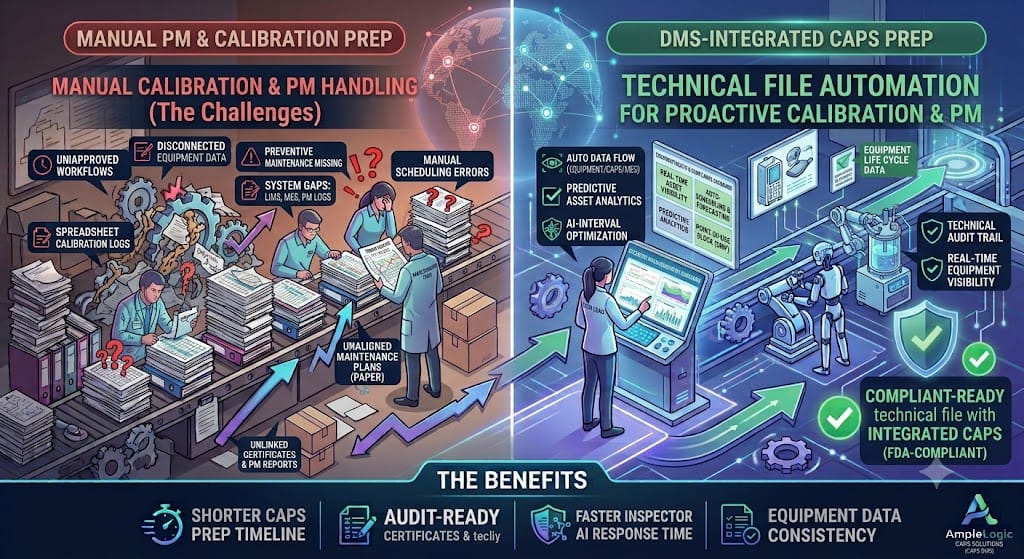
Every piece of GMP-relevant equipment on your floor and in your lab has a calibration or preventive maintenance schedule attached to it, and every one of those schedules matters equally to an inspector. It doesn't take a major equipment failure to draw a citation. A single instrument used one day past its calibration due date, on a batch that later needs review, is enough to raise questions about every result it produced.
The real cost of tracking calibration on spreadsheets
Spreadsheet-based calibration tracking works fine until the equipment list grows past a hundred assets across a few production lines and a lab. At that scale, a missed reminder isn't a matter of if but when. And because spreadsheets don't block anything, an uncalibrated instrument can still get used, the record just won't reflect that it shouldn't have been.
What a connected calibration and maintenance platform actually does
AmpleLogic's Calibration and Preventive Maintenance System treats equipment health as something to actively manage, not just log after the fact:
Calibration scheduling and forecasting with real-time, color-coded alerts, so a due date is visible well before it's missed
AI-recommended maintenance intervals based on historical performance data instead of generic fixed schedules
Real-time blocking of uncalibrated equipment across connected systems like LIMS and eBMR/MES, so an out-of-calibration instrument simply can't be selected for a batch or test
Predictive analytics that flag equipment likely to need attention before it actually fails, reducing unplanned downtime
Native integration with DMS, LMS, eQMS, LIMS, and eBMR/MES, giving a single view of an asset's full lifecycle rather than a maintenance log sitting apart from everything else
Why the blocking function matters more than the reminders
Reminders are useful, but they still depend on someone reading them and acting in time. The feature that actually changes outcomes is the point-of-use block: if an instrument's calibration has lapsed, the connected LIMS or MES simply won't let it be used for GMP work. That shifts the system from reactive record-keeping to active prevention, which is the difference inspectors are increasingly looking for.
Turning maintenance data into a compliance asset
Because calibration and maintenance records live on the same platform as the systems that use that equipment, you get complete visibility into asset health across facilities rather than a maintenance department working from its own separate log. That visibility supports faster audits, since every calibration certificate, service record, and schedule change is where an inspector expects to find it, with a full history attached.
Manufacturers report meaningfully fewer missed calibration deadlines after moving to this kind of system, largely because the schedule and the alerts follow the equipment automatically instead of relying on someone remembering to check a spreadsheet.
You can walk through how the calibration and maintenance workflow connects to your existing lab and manufacturing systems on the CAPS product page.


