A validated manufacturing process is expected to remain in control long after the initial validation batches are complete. In practice, however, processes change. Raw material characteristics vary, equipment performance shifts, environmental conditions fluctuate, and small deviations can gradually become recurring trends.
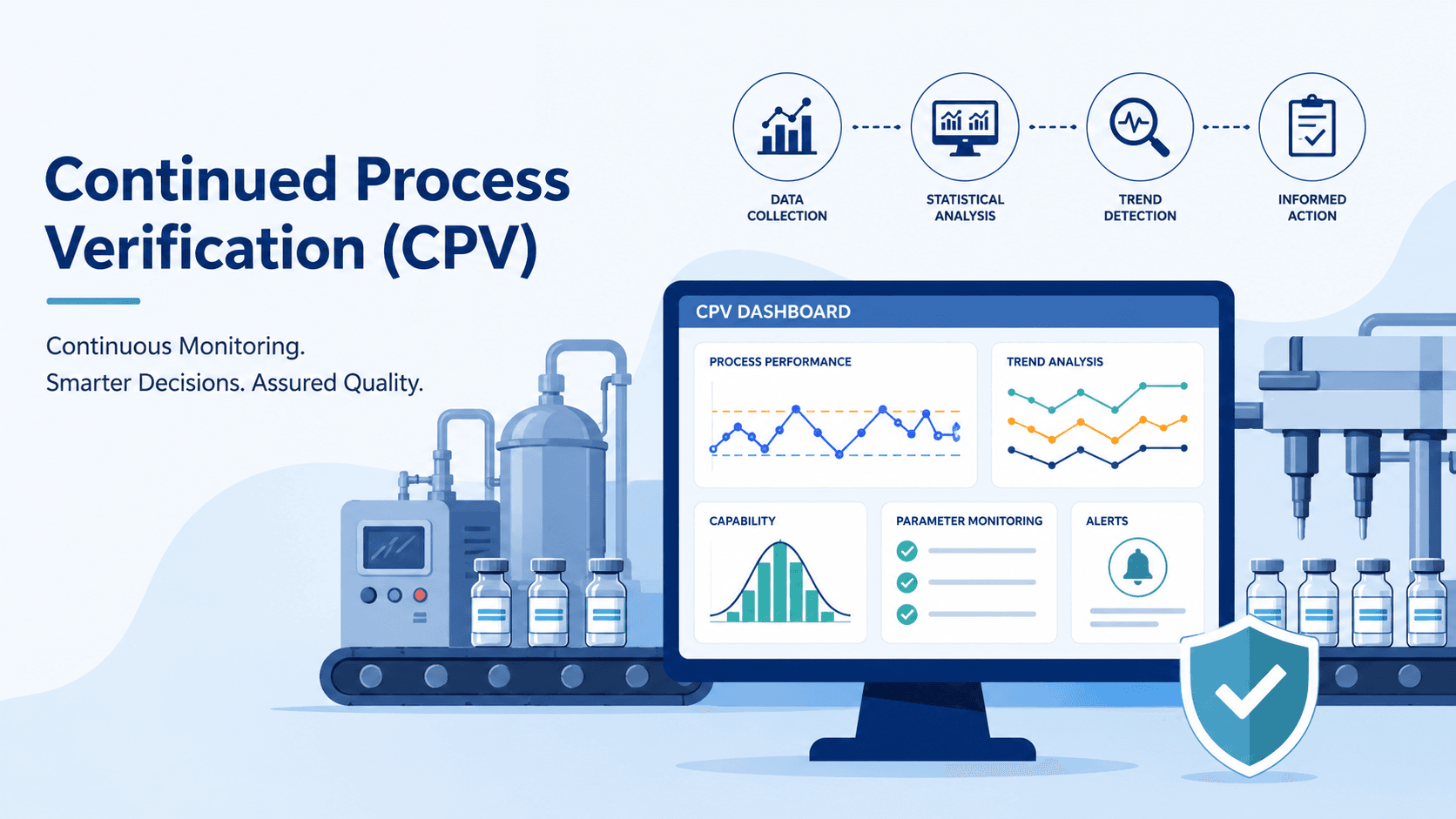
This is where Continued Process Verification software plays an important role. Instead of relying mainly on periodic reviews and disconnected spreadsheets, pharmaceutical manufacturers can continuously evaluate process data and identify changes in performance before they develop into larger quality concerns.
Moving from Periodic Review to Continuous Process Understanding
Traditional process monitoring often involves collecting data from multiple systems, consolidating it manually, and reviewing it at scheduled intervals. While this approach may provide a historical view, it can make early signals difficult to detect.
CPV software provides a more structured way to monitor critical process parameters and critical quality attributes throughout the commercial manufacturing lifecycle. Data can be brought together in a central environment, allowing quality and manufacturing teams to evaluate trends across batches, products, equipment, and manufacturing sites.
For organizations managing complex operations, CPV software for pharmaceutical industry environments helps turn large volumes of manufacturing data into information that can support faster investigation and better process understanding.
Why Spreadsheets Become Difficult to Manage
Spreadsheets are still widely used for process monitoring because they are familiar and flexible. However, as the number of products, batches, parameters, and data sources increases, maintaining them becomes increasingly difficult.
Teams may spend significant time copying data, checking formulas, updating charts, and confirming that the correct file version is being reviewed. A single error in data entry or calculation can affect the accuracy of the analysis.
Modern Pharma process monitoring software reduces this dependency on manual consolidation. By creating a more consistent approach to data collection, monitoring, and analysis, teams can focus more on understanding process behaviour rather than preparing data for review.
Statistical Monitoring That Supports Better Decisions
Collecting process data is only useful when teams can interpret what the data is showing.
This is where Statistical process control software pharma manufacturers use can add significant value. Statistical tools such as control charts, capability analysis, and trend monitoring help teams distinguish between normal process variation and signals that may require further attention.
A parameter may still remain within its specification limits while gradually moving away from its established operating pattern. If that shift is only noticed during a periodic review, valuable time may already have been lost.
Effective Process performance monitoring pharma teams rely on can make these patterns easier to identify. Instead of asking only whether a batch passed or failed, manufacturers can examine a more important question: Is the process continuing to perform as expected?
Supporting a Lifecycle Approach to Process Validation
Process validation is not intended to end once commercial manufacturing begins. The lifecycle approach places continued emphasis on maintaining a state of control and using ongoing manufacturing data to confirm process performance.
An FDA compliant process validation software solution can support this approach by helping organizations maintain structured records of process monitoring activities, statistical evaluations, trends, and performance reviews. It can also provide a clearer foundation for investigations and management decisions when unusual patterns appear.
The goal is not simply to generate more charts or reports. The real value comes from making process knowledge easier to access and act upon.
From Data Collection to Earlier Action
The strongest CPV programs are not built around collecting every possible data point. They focus on monitoring the parameters that matter, applying appropriate statistical methods, and ensuring that the right people can identify meaningful changes.
AmpleLogic’s Continued Process Verification software is designed to support this connected approach to process monitoring. By bringing process data, statistical analysis, trend evaluation, and reporting into a centralized system, manufacturers can reduce manual effort and gain better visibility into ongoing process performance.
For quality and manufacturing teams, this can mean fewer hours spent preparing spreadsheets and more time understanding what the process is actually doing.
As pharmaceutical manufacturing becomes increasingly data-driven, continued process verification is moving beyond a periodic compliance exercise. It is becoming an important part of how manufacturers maintain process control, identify emerging risks, and make informed decisions throughout the product lifecycle.
The question is no longer simply whether a process was validated.
It is whether the data continues to show that the process remains in control.


