In the pharmaceutical industry, product quality must be maintained throughout the product lifecycle. Stability studies play a critical role in ensuring that medicines remain safe, effective, and compliant under different storage conditions. These studies generate large amounts of data that must be tracked, reviewed, and managed accurately.
Traditional stability management methods often rely on spreadsheets, paper records, and manual processes. As pharmaceutical companies grow and regulatory requirements become more demanding, these methods can create inefficiencies, increase compliance risks, and make data management difficult.
This is why many organizations are moving toward digital stability management systems that support end-to-end stability processes within their pharmaceutical quality systems.
What is Stability Management?
Stability management is the process of planning, monitoring, documenting, and reviewing stability studies conducted on pharmaceutical products. These studies help determine how a drug product performs over time under specific environmental conditions such as temperature, humidity, and light exposure.
The primary goals of stability management include:
Determining product shelf life
Supporting regulatory submissions
Ensuring product quality throughout storage
Monitoring ongoing product performance
Maintaining compliance with global regulations
An effective stability management process helps pharmaceutical companies make informed decisions while maintaining data integrity and regulatory compliance.
Challenges in Traditional Stability Management
Many pharmaceutical companies still manage stability studies through disconnected systems and manual workflows. This often leads to several operational challenges.
Manual Data Entry
Recording study information manually increases the risk of human error. Missing entries, duplicate records, and inaccurate data can affect study outcomes and compliance.
Limited Visibility
Tracking sample locations, test schedules, and study status across multiple spreadsheets can be difficult. Teams often struggle to gain real-time visibility into ongoing studies.
Compliance Risks
Regulatory agencies expect complete traceability and audit-ready documentation. Manual processes can make it challenging to demonstrate compliance during inspections.
Missed Study Milestones
Without automated reminders and scheduling, organizations may miss testing intervals or sample withdrawals, potentially impacting study validity.
Data Fragmentation
When information is stored across different systems, generating reports and reviewing study history becomes time-consuming.
Components of End-to-End Stability Management
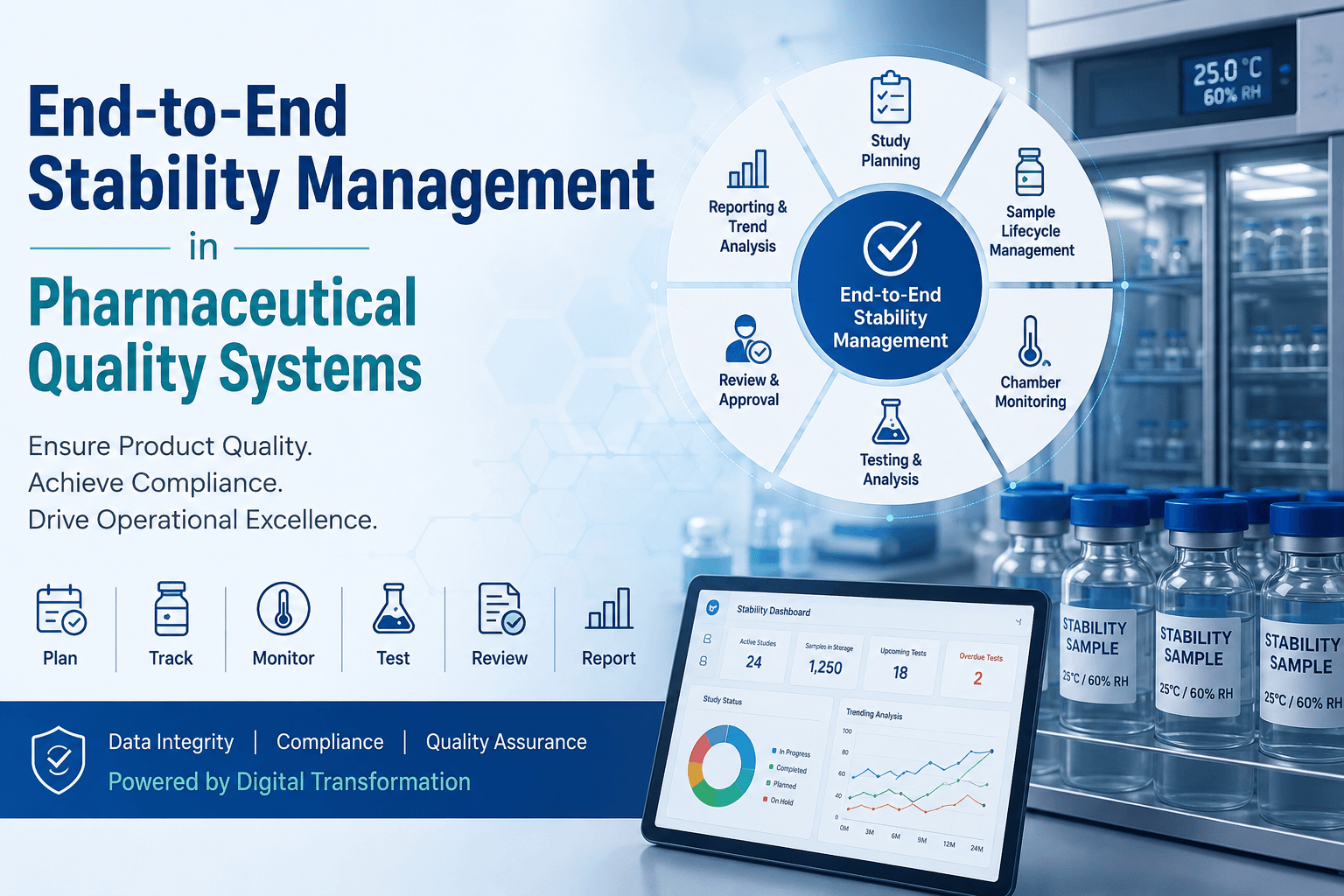
A modern stability management solution connects all stability-related activities into a single digital platform. This enables better control, visibility, and compliance throughout the process.
Study Planning and Protocol Management
The process begins with defining study protocols, storage conditions, product details, testing intervals, and sample requirements.
A centralized system helps teams:
Create standardized study protocols
Maintain version control
Approve studies electronically
Ensure consistency across projects
Sample Lifecycle Management
Effective stability management requires complete tracking of samples from initiation to disposal.
Organizations can monitor:
Sample receipt
Storage location
Sample withdrawals
Testing schedules
Sample consumption
Disposal records
This ensures complete traceability and reduces the risk of lost or misplaced samples.
Stability Chamber Monitoring
Environmental conditions directly affect study outcomes. Continuous monitoring of stability chambers helps ensure products remain under validated storage conditions.
Digital systems provide:
Automated environmental data capture
Real-time monitoring
Alert notifications
Historical trend analysis
Compliance documentation
This improves reliability while reducing manual monitoring efforts.
Testing and Analysis Management
At predefined intervals, samples are withdrawn and tested according to approved protocols.
An integrated stability management solution helps:
Schedule testing activities
Assign tasks automatically
Capture laboratory results
Maintain electronic records
Ensure timely execution of studies
This improves efficiency and reduces delays in testing cycles.
Review and Approval Workflows
Regulatory compliance requires proper review and approval of stability data.
Electronic workflows support:
Role-based reviews
Electronic signatures
Audit trails
Controlled approvals
Documentation traceability
This ensures every action is recorded and accessible for inspections.
Reporting and Trend Analysis
Stability studies generate valuable data that can support quality and business decisions.
Advanced reporting capabilities allow organizations to:
Generate regulatory reports
Analyze product trends
Identify potential quality issues
Monitor study progress
Support shelf-life evaluations
Real-time dashboards provide quick access to critical information and study performance metrics.
Regulatory Expectations for Stability Management
Global regulatory agencies emphasize strong data integrity and documentation practices for stability studies.
Regulations and guidelines such as:
US FDA 21 CFR Part 11
EU GMP Annex 11
ICH Q1A Stability Guidelines
ALCOA+ Data Integrity Principles
require pharmaceutical companies to maintain accurate, complete, and traceable records throughout the stability study lifecycle.
A digital stability management platform helps organizations meet these requirements by providing secure record management, electronic signatures, audit trails, and controlled workflows.
Benefits of Digital Stability Management
Implementing an end-to-end stability management system offers significant operational and compliance advantages.
Improved Data Integrity
Automated data capture and controlled workflows reduce manual errors and improve record accuracy.
Enhanced Regulatory Compliance
Electronic audit trails, secure documentation, and validated processes support inspection readiness.
Increased Operational Efficiency
Automation reduces administrative workload and allows teams to focus on quality and scientific activities.
Better Visibility
Real-time dashboards provide complete visibility into study status, sample inventory, and testing schedules.
Faster Decision Making
Centralized access to stability data enables quicker reviews, trend analysis, and product assessments.
Reduced Compliance Risk
Automated alerts and workflow controls help prevent missed testing intervals and incomplete documentation.
How AmpleLogic Supports End-to-End Stability Management
AmpleLogic's Stability Management Solution is designed specifically for pharmaceutical, biotechnology, and life sciences organizations seeking a compliant and efficient approach to stability studies.
The platform enables organizations to manage the complete stability lifecycle from study creation to final reporting through a centralized and validated digital environment.
Key capabilities include:
Study protocol management
Sample lifecycle tracking
Stability chamber integration
Automated scheduling and reminders
Electronic workflows and approvals
Audit trails and electronic signatures
Regulatory-compliant documentation
Real-time dashboards and reporting
By integrating stability management with broader pharmaceutical quality systems, AmpleLogic helps organizations improve compliance, enhance operational efficiency, and maintain complete visibility across all stability programs.
Ready to Modernize Your Stability Program?
Managing stability studies through spreadsheets and manual processes can slow operations and increase compliance risks. A modern digital stability management solution provides the control, traceability, and efficiency needed to support today's regulatory expectations.
Discover how AmpleLogic's Stability Management Solution can help your organization streamline stability studies, improve data integrity, and achieve inspection readiness.
Schedule a personalized demo today and explore how AmpleLogic can transform your end-to-end stability management process.


