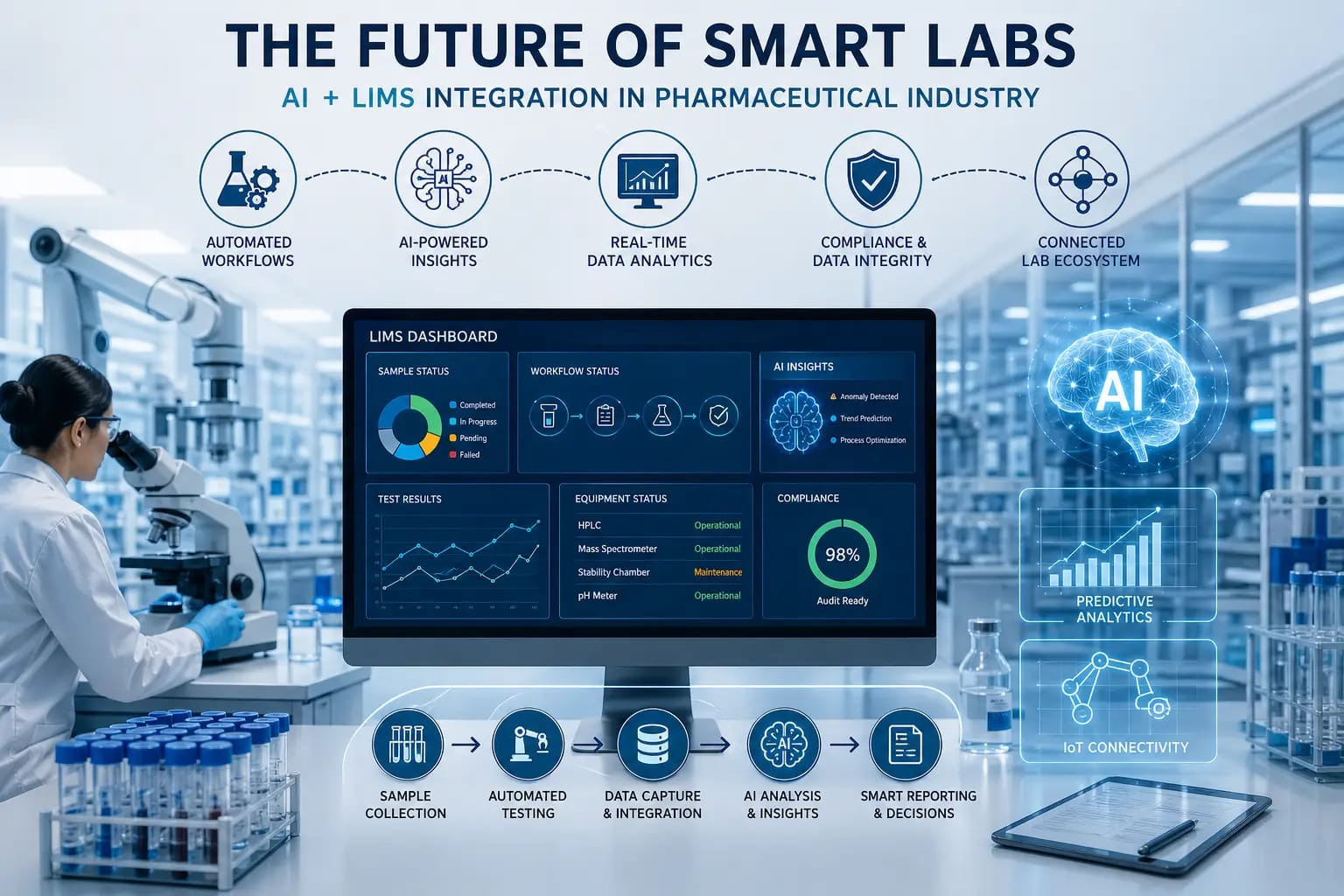
The world of pharmaceuticals is evolving rapidly, with laboratory processes being the hotspot of these developments. Given the increasing pressure in terms of regulation, increased volumes of data, and shortened time frames of development, there is no space for traditional laboratories any longer.
This is where the integration of Artificial Intelligence (AI) and LIMS becomes essential, as it marks the dawn of new smart laboratories.
LIMS in Contemporary Pharmaceutical Industry
The Laboratory Information Management System (LIMS) is more than a computer program; it is the backbone of the laboratory process. This system controls the samples, synchronizes the workflow, documents tests, and maintains documentation according to international regulations.
In the modern age, the role of LIMS goes beyond being a mere repository of data. It functions as an integrated platform connecting equipment, standardizing procedures, and ensuring complete traceability within the lab process.
The benefits of advanced LIMS in the pharmaceutical industry include:
- Comprehensive sample life cycle management
- Automation of workflows with approval capabilities
- Auditable documentation
- Conformity with regulatory requirements like FDA regulations and GxP guidelines
What Defines the Operation of a Smart Lab?
A smart lab is an interconnected system of technology that can operate in harmony without any disruptions. This is not only about automation but also about making decisions intelligently based on insights provided.
In a smart lab, you can expect to see:
- Automated capturing of data coming from equipment
- Interconnected processes without the need for human interference
- Optimized work processes
- Insights generated by artificial intelligence
All this transform’s laboratories into proactively operating facilities rather than reactive ones.
AI Impact on LIMS Integration
With AI, LIMS becomes more intelligent in processing structured data. AI is capable of not only managing and storing the data but interpreting it to help laboratories make the right decisions.
Key capabilities of AI enabled LIMS
Predictive Analytics
Based on past and current laboratory data, AI can predict trends, analyze possible threats, and achieve better results in such areas as quality control and stability testing.
Anomaly Detection
AI can detect deviations from normal results and help laboratories avoid mistakes that could compromise data.
Workflow Optimization
With AI support, lab workflows are always evaluated and improved for greater efficiency.
Automated Reporting
Automated report generation with little involvement of employees cuts down the time spent on creating reports.
Intelligent Search
AI can perform an intelligent search to provide faster access to information.
Once AI technology merges with LIMS, there emerges an efficient digital infrastructure for a pharmaceutical company.
The basic layers of integration include:
- Instrument interface:
Laboratory equipment automatically delivers information into the LIMS without any manual data input and minimizes errors.
- Data standardization:
The data from multiple sources becomes normalized into a single format.
- Artificial intelligence analysis engine:
This layer uses artificial intelligence technology to analyze the data, provide insights, predictions, and warnings.
- Inter-enterprise integration:
The LIMS integrates with other management systems such as QMS, ERP, and MES.
In summary, the integration system facilitates the smooth flow of information between departments.
Business benefits for pharma companies
Increased Efficiency in Operations
Automation of repetitive activities such as sample tracking, approval process, and report generation significantly reduces human workload.
Data Quality and Integrity
Obtaining data through direct data entry eliminates human error and ensures quality and integrity of data obtained.
Enhanced Regulatory Compliance
Pharma companies need to ensure regulatory compliance in their operations. Some key features supported by AI-enabled LIMS include audit trails, e-signatures, and electronic record keeping.
Faster Decision Making
Decision making processes in pharma companies become easier with real-time data access through AI-based solutions.
Cost Reduction
Errors in processing information, proper resource utilization, and automation lead to reduced costs of operations.
Predictive Maintenance
Artificial intelligence can detect any issues with equipment and predict their malfunction.
Real-World Use Cases
AI and LIMS integration is already transforming key pharma operations:
Quality Control Laboratories
Ensuring consistent product quality through automated testing and real-time monitoring.
Drug Development
Accelerating research by analysing large datasets and identifying patterns.
Stability Studies
Predicting product shelf life using historical and real-time data.
Clinical Trial Support
Managing sample tracking and data integrity across multiple sites.
Challenges to consider
Though the advantages are evident, implementation will require proper planning.
Cost of Implementation
Although modern technology requires investment initially, it provides high returns in the long run.
Integration Difficulties
The integration process between LIMS and other existing tools requires expertise.
Security Concerns
The pharma industry involves confidential information, which must be protected with advanced security measures.
User Training
Proper training and management of the process are critical to the success of implementation.
Future of Smart Labs in Pharma
The future of pharmaceutical laboratories will be driven by intelligent and connected technologies.
Autonomous Laboratory Operations
AI will increasingly automate decision-making and workflow execution with minimal human intervention.
Cloud-Based LIMS
Cloud platforms will enable scalability, remote access, and global collaboration.
Integration with Emerging Technologies
Smart labs will integrate with IoT, robotics, and advanced analytics for enhanced efficiency.
Support for Personalized Medicine
AI-driven data management will enable more precise and personalized treatment approaches.
Why Choose AmpleLogic for the Smart Lab Transformation
As a leading provider of digital solutions for the life sciences industry, AmpleLogic delivers advanced LIMS solutions designed to meet the unique needs of pharmaceutical organizations.
Key aspects of AmpleLogic include:
- Compliance with regulations and data integrity
- Ease of integration
- Scalability and customization
- User-friendly interfaces
Through the combination of its domain expertise and advanced technologies, AmpleLogic can help pharmaceutical organizations achieve their smart lab transformation.

The integration of artificial intelligence into the system of lab information management systems (LIMS) doesn't mean mere technological changes. It is a step towards better and more efficient laboratory work.
For pharmaceutical firms, integrating artificial intelligence into their LIMS systems means increased efficiency, decreased risks, and accelerated innovation. With time, smart labs will define new trends.
It's time to embrace AI-based LIMS systems and start building future-proof laboratories.


