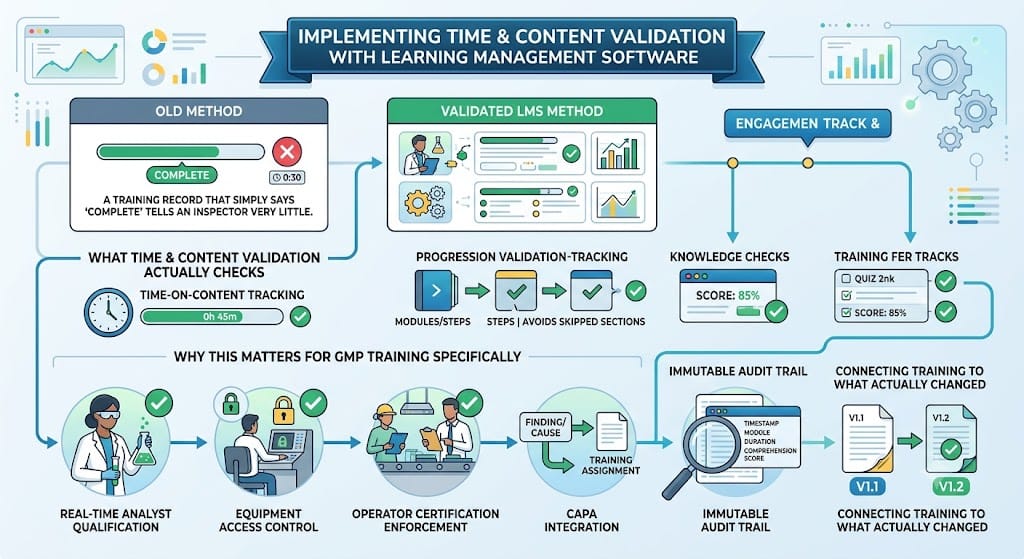
A training record that simply says "complete" tells an inspector very little. It doesn't show whether the learner spent thirty seconds clicking through a module or genuinely engaged with the material for the time it was designed to take. In a GMP environment, where training is the control that's supposed to stand between an untrained operator and a batch record, that gap matters. Time and content validation is the mechanism that closes it.
What time and content validation actually checks
Rather than marking a course complete the moment a "finish" button is clicked, a validated LMS tracks whether the learner engaged with the content for a reasonable proportion of its expected duration, and whether they actually progressed through the required sections rather than skipping ahead. Some configurations also require a minimum score on embedded knowledge checks tied to specific content sections, so completion reflects comprehension, not just exposure.
Why this matters for GMP training specifically
Training in a regulated environment isn't just a compliance checkbox, it's an active control. AmpleLogic's Learning Management System is built around that idea, connecting training directly to the operations it's meant to protect:
Real-time analyst qualification validation ensures only trained personnel can execute a given lab procedure
Equipment access control checks training certification before granting log-on access to a piece of equipment
Operator certification enforcement validates manufacturing personnel qualifications before batch execution can proceed
Training need automatically maps from regulatory findings, so a CAPA that identifies a knowledge gap generates the right training assignment without a manual handoff
The audit trail that comes with it
Because time-on-content and progression data are captured automatically as part of the course delivery, the resulting record is generated with an immutable audit trail rather than assembled after the fact. That matters when an inspector asks not just "was this person trained," but "how do you know the training was effective." A validated engagement record, tied to a specific SOP version, answers that question directly.
Connecting training to what actually changed
One of the more overlooked benefits is what happens when an SOP or specification changes. A properly configured LMS ties training assignments to document revisions, so a new or updated SOP automatically triggers retraining for the affected roles, and equipment or system access can be gated on completion of that retraining. That closes a common finding: personnel still working from an outdated procedure because the training update didn't reach them in time.
Getting the rollout right
Implementing time and content validation doesn't require redesigning your entire curriculum. Most teams start by applying it to the highest-risk courses, those tied directly to batch execution or lab testing, and expand from there once the workflow is proven.
If you want to see how validated training connects to your existing SOPs and equipment access controls, the Learning Management System page covers the integration options available for your current systems.


