Walk into a busy pharmaceutical QC laboratory on a Monday morning and you'll probably see the same pattern. Samples are arriving from manufacturing, analysts are checking instrument availability, supervisors are reshuffling priorities because an urgent batch release just landed, and someone is updating yet another spreadsheet to keep everything aligned.
None of this means the lab isn't performing well. It usually means the planning process is still relying on manual coordination.
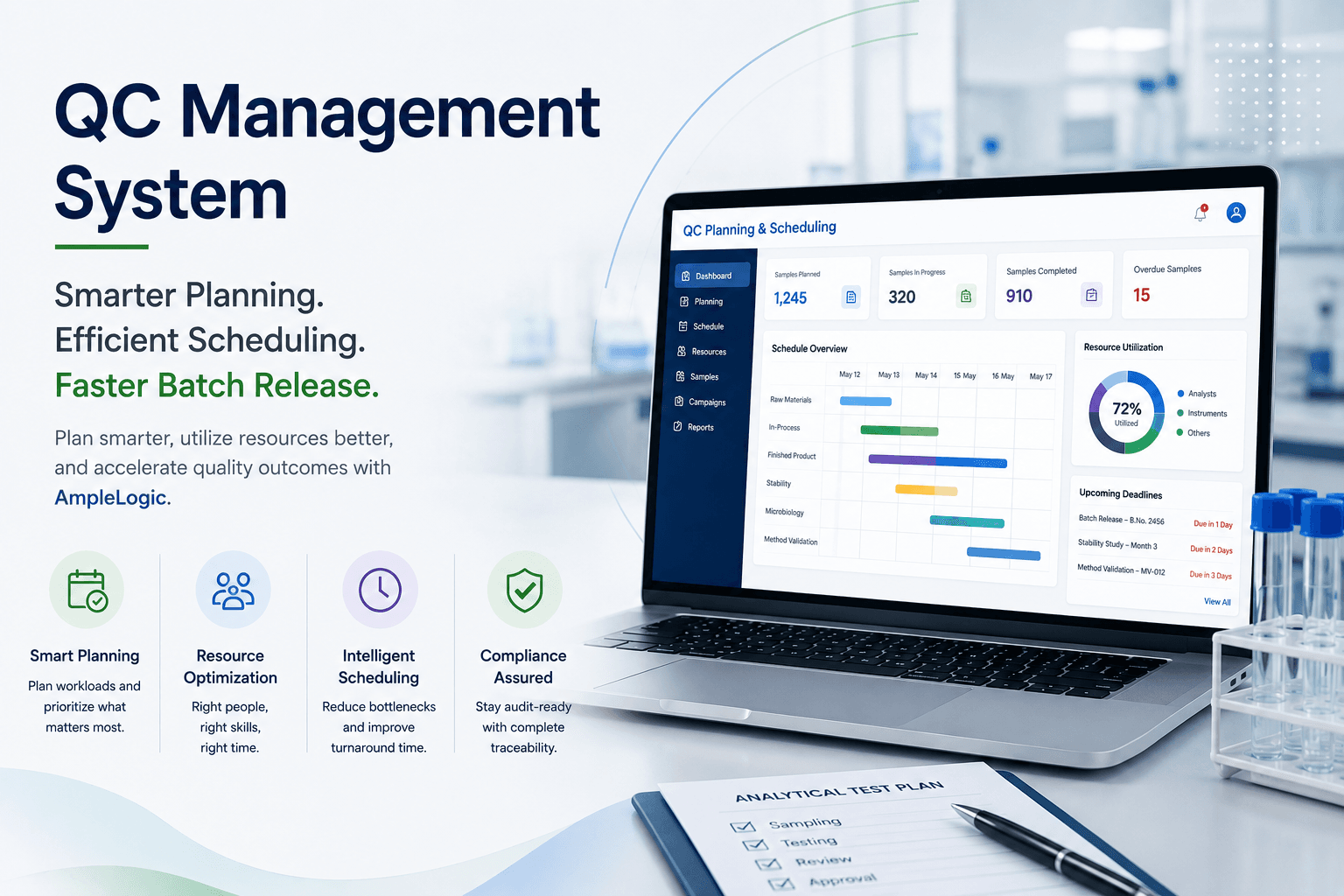
That's exactly where a modern QC Management System changes the conversation. Instead of asking people to work faster, it helps the laboratory work smarter by bringing planning, scheduling, resource allocation, and execution into a single controlled environment. For laboratories trying to reduce turnaround times without compromising compliance, that's becoming less of a competitive advantage and more of a necessity.
QC Isn't Just About Testing Anymore
Quality Control has evolved considerably over the last decade.
Today's laboratories aren't simply testing finished products. They're managing stability studies, in-process testing, raw material analysis, environmental monitoring, method validations, and release testing, often across multiple production lines operating simultaneously.
The challenge isn't usually a lack of skilled analysts. It's knowing which analyst should perform which test, on which instrument, and in what order.
When those decisions depend on spreadsheets, emails, or whiteboards, delays become almost inevitable.
You'll often hear laboratory managers mention issues like:
Analysts waiting for instrument availability.
High-priority samples getting buried beneath routine work.
Equipment sitting idle while another instrument develops a backlog.
Last-minute schedule changes creating confusion across shifts.
Batch release timelines slipping because testing wasn't planned efficiently.
Individually, these problems seem manageable. Collectively, they slow down the entire manufacturing process.
What a QC Management System Should Actually Solve
There's no shortage of laboratory software on the market. The difference is whether the software simply records activity or actively helps laboratories plan it.
A practical QC Management System should be able to:
Forecast laboratory workload before bottlenecks develop.
Allocate analysts based on qualifications and availability.
Schedule instruments without resource conflicts.
Prioritize release and stability samples automatically.
Track turnaround times in real time.
Maintain complete traceability for compliance.
Those capabilities sound straightforward, yet they're often spread across multiple disconnected applications.
AmpleLogic approaches the problem differently by combining QC planning, intelligent scheduling, campaign-based execution, and laboratory visibility within a single platform rather than asking laboratories to coordinate separate systems.
Better Planning Usually Delivers Bigger Gains Than More Resources
When laboratories experience delays, the first instinct is often to add more analysts or purchase another instrument.
Sometimes that's necessary.
More often, though, existing resources simply aren't being utilized efficiently.
Take instrument scheduling as an example. If similar samples are grouped together into a planned analytical campaign, analysts spend less time changing methods and more time generating results. Likewise, assigning work based on analyst qualifications and current workload prevents certain individuals from becoming overloaded while others remain underutilized.
Those improvements don't require additional laboratory capacity. They require better planning.
That's one of the reasons intelligent scheduling has become such a priority across pharmaceutical QC operations. Instead of reacting to bottlenecks after they happen, laboratories can anticipate them before they affect turnaround times.
Visibility Matters More Than Most Teams Realize
Ask a QC manager a simple question during the middle of the day.
"How many release samples are at risk of missing their turnaround time?"
If the answer depends on calling supervisors or checking multiple spreadsheets, there's already a visibility problem.
A well-designed QC Management System provides that information immediately through real-time dashboards. Supervisors can see analyst workload, instrument utilization, pending activities, approaching deadlines, and testing progress without waiting for manual updates.
That kind of visibility becomes especially valuable when priorities change unexpectedly, which, in pharmaceutical manufacturing, happens more often than most planning documents would suggest.
Why Compliance Can't Be Separated From Scheduling
Planning software isn't particularly useful if it creates compliance headaches.
Every scheduling decision in a regulated laboratory eventually connects back to documentation, analyst qualifications, equipment status, and audit readiness.
That's why modern QC platforms need to support complete traceability rather than simply assigning work.
AmpleLogic's QC Planning & Scheduling solution is designed with regulated laboratories in mind, supporting qualification-based analyst assignment, laboratory resource planning, audit-ready reporting, and complete workflow visibility while helping organizations align with FDA-compliant quality processes.
Does Better Planning Translate Into Better Performance?
Every laboratory has different operational goals, so no software can promise identical results.
That said, organizations generally expect improvements in three areas after replacing manual scheduling with digital planning:
Reduced testing turnaround time.
Better utilization of analysts and laboratory instruments.
Faster preparation for inspections and internal audits.
AmpleLogic also highlights measurable operational improvements, including faster turnaround, higher laboratory throughput, and significantly reduced audit preparation effort through automated planning and centralized visibility. Those outcomes naturally depend on implementation, laboratory maturity, and existing processes, but they reflect the direction many pharmaceutical laboratories are aiming for today.
The Bottom Line
Most QC laboratories don't struggle because they lack expertise. They struggle because coordination becomes increasingly difficult as sample volumes, regulatory expectations, and manufacturing demands continue to grow.
A modern QC Management System helps bring structure to that complexity. Instead of relying on disconnected spreadsheets and constant follow-up, laboratories gain a centralized way to plan work, allocate resources, monitor progress, and maintain compliance.
For pharmaceutical organizations looking to improve laboratory efficiency without sacrificing quality, smarter planning may be one of the highest-impact changes they can make. And that's precisely where AmpleLogic's QC Planning & Scheduling platform is designed to fit.


