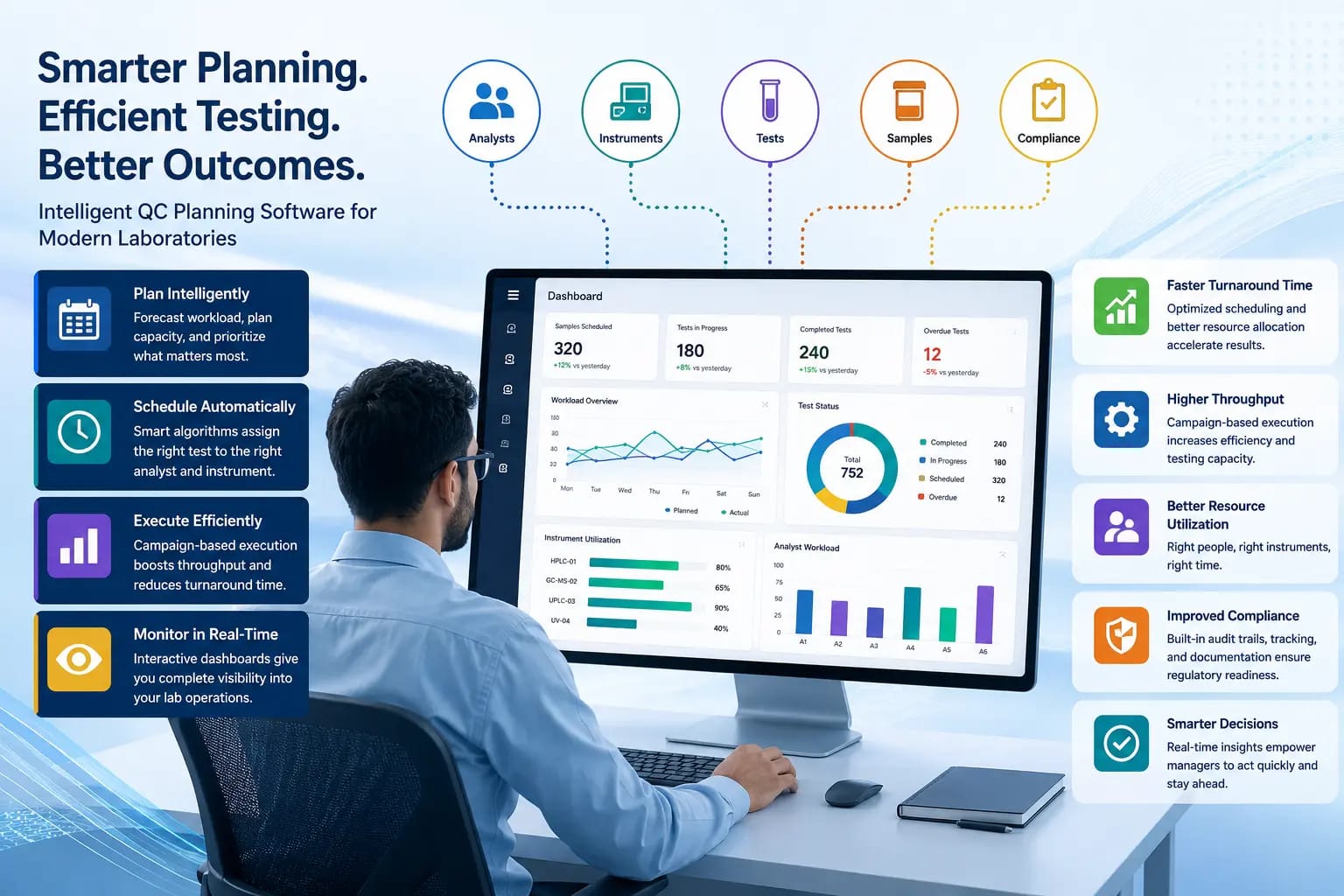
In pharmaceutical and biotechnology laboratories, quality control operations play an important role to ensure product quality with regulatory compliance and timely batch release. However, many laboratories today still depend on numerous spreadsheets, manual planning, and scattered systems. This makes it hard to keep track of things like testing schedules the people doing the testing the machines used and the samples being tested.
As the number of testing samples increases and regulatory expectations become more strict than usual, manual planning methods create bottlenecks that impact productivity, turnaround time, and compliance.
This is where intelligent QC Planning Software can transform laboratory operations.
Why Modern QC Laboratories Need Smarter Planning
Quality control laboratories are responsible to manage hundreds of samples by multiple testing methods, qualified analysts, and sophisticated analytical instruments. Keeping a track of all those and coordinating them manually often leads to operational inefficiencies.
Common challenges faced by QC laboratories include:
Inefficient utilization of analysts and laboratory instruments
Delayed testing caused by manual scheduling processes
Lack of visibility into laboratory workload and capacity
Instrument downtime due to poor planning
Difficulty prioritizing urgent release and stability samples
Increased risk to miss given deadlines and compliance issues
These challenges do not slow down the laboratory operations but they can also delay the product release and impact the overall manufacturing timelines of the laboratory operations and the product release.
What Is QC Planning Software?
The QC Planning Software is a tool that helps laboratories plan and schedule things better. It makes sure that quality control operations are done in the way possible. The QC Planning Software helps laboratories use their resources wisely schedule tests, decide which samples are a priority and keep an eye on everything as it happens with the QC Planning Software. This way laboratories can work efficiently with the QC Planning Software.
Instead of validating across various spreadsheets and manual coordination, laboratories can keep a track of daily operations with smarter planning and automated scheduling while maintaining compliance.
Modern QC laboratories need more than scheduling tools. They need a smarter way to coordinate with a lot of people, instruments, and samples to keep operations running smoothly.
Key Capabilities of Intelligent QC Planning Software
1. Intelligent QC Planning and Forecasting
Effective laboratory management starts with accurate planning.
Advanced QC Resource Planning Software enables laboratories to forecast testing workloads, plan batch releases, prioritize samples, and evaluate laboratory capacity before bottlenecks occur.
Benefits include:
Better workload forecasting
Improved batch release planning
Enhanced sample prioritization
Optimized laboratory capacity utilization
This proactive approach helps laboratories stay ahead of increasing testing demands.
2. Automated QC Scheduling
Manual scheduling may often results in conflicts, delays, and uneven workload distribution.
Automated QC Scheduling Software uses intelligent algorithms to assign tests based on:
Analyst qualifications
Instrument availability
Workload balancing
Sample priority levels
Regulatory requirements
The result is a more efficient testing environment where resources are automatically optimized without extensive manual intervention.
3. Campaign-Based Test Execution
One of the most effective ways to improve laboratory throughput is through campaign-based execution.
Instead of processing samples individually, the software groups similar samples and analytical methods into optimized campaigns.
This approach helps laboratories:
Reduce instrument setup and changeover time
Increase testing throughput
Improve consistency across test runs
Minimize manual scheduling effort
Campaign-based execution is particularly valuable in high-volume QC environments where efficiency gains directly impact turnaround times.
4. Laboratory Resource Optimization
Laboratory managers need complete visibility into available resources.
QC Planning Software provides real-time monitoring of:
Instrument availability
Analyst qualifications
Testing capacity
Resource utilization trends
This visibility enables better decision-making and ensures resources are deployed where they create the most value.
5. Real-Time Operational Visibility
Modern laboratories require instant access to operational data.
Interactive dashboards provide real-time insights into:
Test progress
Instrument utilization
Analyst productivity
Pending workloads
Turnaround time performance
With centralized visibility, laboratory leaders can quickly identify bottlenecks and take corrective actions before delays occur.
How Automated QC Scheduling Streamlines Laboratory Operations
A well-designed Quality Control Workflow Software solution creates a structured execution process from sample registration through final reporting.
Sample Registration and Test Assignment
Samples can be automatically registered through LIMS integrations, ERP triggers, or manual entry. Predefined test plans and priorities are assigned immediately.
Intelligent Scheduling
The system automatically assigns tests to qualified analysts and available instruments while detecting scheduling conflicts before they occur.
Campaign Formation
Samples are grouped based on product, method, or turnaround time requirements to maximize efficiency and reduce setup time.
Test Execution
Analysts can launch scheduled tests with a single click. Methods, sample lists, and QC parameters are pre-configured, reducing errors and ensuring consistency.
Real-Time Monitoring
Laboratory managers gain continuous visibility into active tests, pending activities, resource utilization, and approaching deadlines.
Automated Reporting
The system generates audit-ready documentation, turnaround time reports, analyst productivity metrics, equipment utilization reports, and OOS-related insights automatically.
Business Benefits of QC Planning Software
Implementing intelligent QC Planning Software delivers measurable improvements across laboratory operations.
Faster Turnaround Time
Automated scheduling and optimized resource allocation reduce testing delays and accelerate sample processing.
Higher Laboratory Throughput
Campaign-based execution enables laboratories to process more samples without increasing headcount or equipment investments.
Better Resource Utilization
Analysts and instruments are allocated based on availability, qualifications, and workload, reducing idle time.
Improved Compliance
Built-in audit trails, qualification tracking, calibration monitoring, and electronic documentation support GMP and regulatory requirements.
Enhanced Decision-Making
Real-time dashboards provide actionable insights that help managers optimize laboratory performance continuously.
Real-World Applications Across Pharma and Biotech
Batch Release Testing
Priority-based scheduling ensures critical release samples are tested first, helping manufacturers accelerate product release while maintaining compliance.
High-Volume QC Laboratories
Laboratories processing hundreds of samples daily can significantly improve throughput through automated scheduling and sample campaigning.
Stability Testing Programs
Automated reminders and scheduling help organizations manage complex stability pull schedules while ensuring adherence to ICH requirements.
Multi-Site Laboratory Operations
Centralized planning provides visibility across multiple facilities, enabling better workload balancing and resource sharing.
Regulatory Audit Readiness
Complete traceability of analyst qualifications, instrument status, testing history, and scheduling decisions supports faster and more successful inspections.
The Future of QC Laboratory Management
As pharmaceutical manufacturing continues to evolve, laboratories must move beyond spreadsheets and manual planning methods.
Intelligent QC Planning Software allows organizations to optimize resources, reduce turnaround times, increase testing throughput, and maintain compliance in increasingly complex regulatory environments.
By integrating intelligent planning, automated scheduling, campaign-based execution, and real-time visibility into a single centralised platform by which the laboratories can make quality control a key strength. Organizations which need greater efficiency, faster batch releases, and stronger compliance with advanced QC Planning Software is no longer a luxury—it's a necessity.


