Every pharmaceutical manufacturer wants to shorten batch release timelines without compromising product quality or regulatory compliance. Yet, many delays begin long before laboratory testing is complete. Samples wait for available analysts, instruments are booked for other activities, and production schedules change without giving the QC team enough time to adjust. The result is a laboratory that is constantly reacting instead of operating with a clear plan.
As manufacturing volumes continue to grow, these challenges become harder to manage using spreadsheets or manual scheduling. This is why Quality Control planning software is gaining attention across pharmaceutical laboratories. It helps quality teams organize testing activities, balance workloads, and improve laboratory efficiency so batches move through quality control with fewer delays.
The Hidden Cost of Poor QC Planning
Most discussions about batch release focus on analytical testing. In reality, laboratories often lose valuable time because of poor planning rather than slow testing.
A typical day in a pharmaceutical QC lab involves handling multiple priorities at once. Finished product samples, raw material testing, stability studies, environmental monitoring, and investigation samples all compete for the same analysts and instruments. Without a centralized planning process, conflicts are almost inevitable.
Common challenges include:
Analysts assigned to overlapping activities
Instrument scheduling conflicts
Last minute production requests
Uneven workload distribution
Limited visibility into laboratory capacity
Delayed communication between production and QC teams
Even small scheduling issues can delay an entire production batch, affecting inventory, customer commitments, and operational costs.
Why Traditional Scheduling No Longer Works
Many pharmaceutical laboratories still rely on spreadsheets, whiteboards, emails, or individual experience to coordinate testing activities. While these methods may work in smaller operations, they become difficult to manage as production scales.
Manual planning creates several risks. Managers spend hours adjusting schedules instead of improving laboratory performance. Teams lack real time visibility into available resources, making it difficult to respond when priorities change.
As regulatory expectations continue to evolve, laboratories also need better documentation, traceability, and planning records. Manual systems rarely provide the level of transparency expected during inspections.
How Quality Control Planning Software Improves Batch Release
Modern Quality Control planning software brings structure to laboratory operations by connecting people, instruments, and testing schedules on a single platform.
Instead of manually assigning work, laboratories can plan activities based on resource availability and business priorities.
Key capabilities include:
Automated sample scheduling
Analyst workload balancing
Instrument availability tracking
Laboratory capacity planning
Priority based testing schedules
Real time dashboards
Electronic audit trails
Better coordination between manufacturing and quality teams
These capabilities reduce idle time and help laboratories process samples more efficiently.
How AmpleLogic QC Planning Software Helps
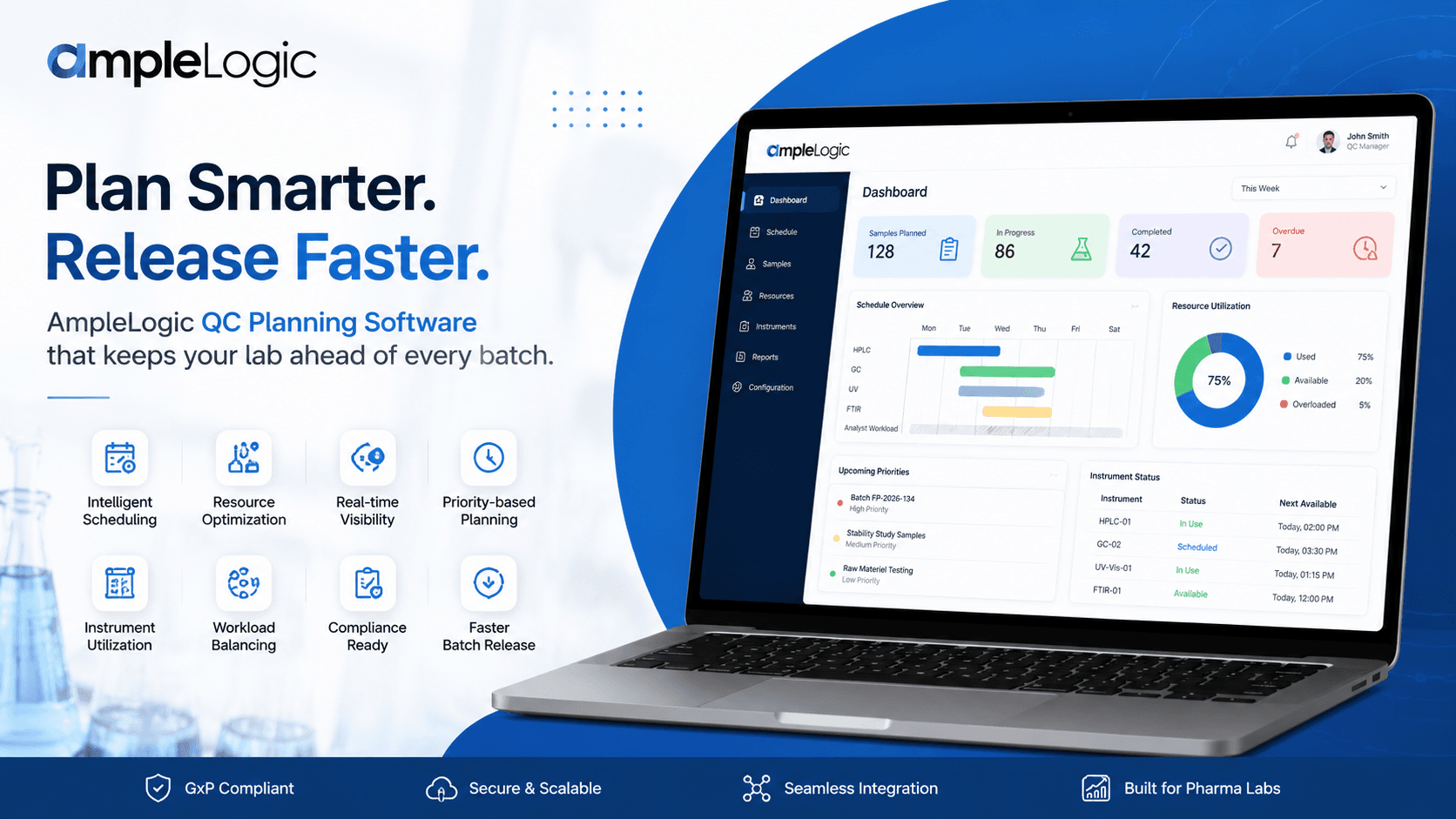
AmpleLogic's Quality Control Planning Software is designed specifically for pharmaceutical and life sciences organizations that need better control over laboratory operations.
The platform helps QC teams replace disconnected scheduling methods with a centralized planning environment that improves visibility across the laboratory.
With AmpleLogic, organizations can:
Plan laboratory activities from a single dashboard
Allocate analysts based on qualifications and workload
Schedule instruments more efficiently
Monitor testing progress in real time
Track laboratory resource utilization
Improve communication between production and quality teams
Maintain complete audit trails for regulatory compliance
Integrate with existing digital quality systems
By improving planning accuracy, laboratories can reduce scheduling conflicts and support faster batch release without increasing operational complexity.
Business Benefits Beyond Faster Release
The impact of better planning extends well beyond laboratory scheduling.
Organizations adopting Quality Control planning software often experience:
Reduced batch release timelines
Higher laboratory productivity
Better utilization of instruments
Improved resource planning
Lower administrative effort
Greater operational visibility
More predictable laboratory performance
Stronger regulatory readiness
These improvements help quality teams support manufacturing objectives while maintaining compliance with GxP requirements.
Conclusion
When we think about the world we live in today getting batches out the door quickly is just as much about planning ahead as it is about doing the right tests. Laboratories that still use scheduling methods often have a hard time with things like resource conflicts and limited visibility. This can cause delays that're really not necessary. The pharmaceutical environment is about speed and accuracy. In this environment laboratories need to be on top of things to avoid these problems. The key to faster batch release, in the environment is finding a better way to plan and manage resources.
Implementing Quality Control planning software enables pharmaceutical organizations to streamline laboratory operations, improve resource utilization, and accelerate batch release with greater confidence.
For companies pursuing digital transformation, solutions like AmpleLogic QC Planning Software provide the visibility, automation, and operational control needed to build a more efficient and future-ready quality control laboratory.


