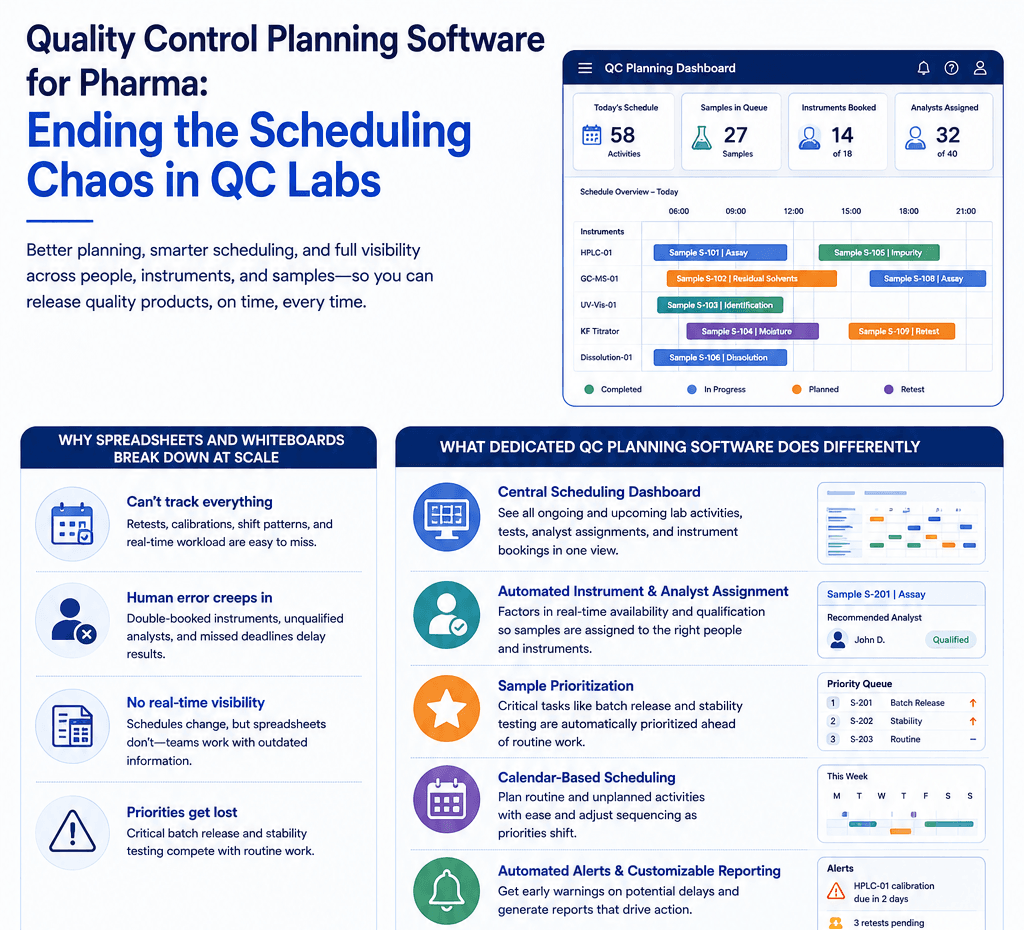
Ask a QC lab manager what actually delays batch release, and testing capability is rarely the answer. It's more often a scheduling problem: two samples that both need the same instrument on the same day, an analyst who's qualified for a test but already booked on another priority sample, or a retest that wasn't accounted for when the week's plan was built. These are operational risks, not scientific ones, and they're solvable with better planning tools rather than more lab capacity.
Why spreadsheets and whiteboards break down at scale
A small QC lab can manage scheduling informally. Once a lab is running multiple product lines, shift patterns, and a mix of routine and stability testing, informal scheduling stops scaling. Paper processes and basic spreadsheets can't reliably track retests, equipment calibration status, or real-time analyst workload, which is exactly where human error creeps into what should be a predictable process.
What dedicated QC planning software does differently
AmpleLogic's QC Planning and Scheduling software is built specifically around the operational risks above rather than treating scheduling as a side feature of a broader LIMS:
A central scheduling dashboard shows every ongoing and upcoming lab activity, test, analyst assignment, and instrument booking in one view
Automated instrument and analyst assignment factors in real-time availability and qualification, so a sample doesn't get assigned to someone who isn't certified for that test
Sample prioritization ensures critical tasks, like batch release or stability testing, are scheduled ahead of routine work automatically
Calendar-based scheduling covers both routine and unplanned activities, letting managers adjust sequencing as priorities shift without rebuilding the whole plan
Automated alerts and customizable reporting flag missed deadlines early enough to actually do something about them
The connection to batch release timelines
Because sample prioritization and instrument assignment are handled by the system rather than by memory or a whiteboard, batch release testing gets the scheduling priority it needs without someone having to manually reshuffle the week every time a release sample comes in. That's a direct link between better lab scheduling and faster, more predictable batch release, which is often the metric that actually gets noticed outside the QC department.
What senior analysts get back
One underappreciated benefit is what this takes off senior analysts' plates. Digital workflows that replace paper and manual sequencing free experienced staff from routine administrative work, letting them spend more time on the testing and investigations that actually need their expertise, rather than coordinating who's using which instrument when.
Getting started
Most labs see the fastest return by digitizing the highest-friction part of their current process first, usually instrument and analyst assignment, before expanding into full calendar-based planning across the lab.
To see how QC planning connects with your existing LIMS and instrument fleet, the QC Planning and Scheduling page walks through the dashboard and reporting options available.


