Shipping software on time is table stakes. Shipping software that works reliably, meets regulatory requirements, and holds up under scrutiny that's where organizations differentiate. A Software Quality Management System (SQMS) is the structured foundation that makes that possible, systematically, and at scale.
What Is a Software Quality Management System?
A Software Quality Management System is a structured framework of processes, procedures, and tools designed to ensure software products meet expected quality standards, functional requirements, and regulatory compliance. It doesn't operate at the end of development as a final checkpoint it spans the entire lifecycle, from initial planning through deployment and ongoing maintenance.
The result is not just fewer defects. It's a development culture where quality is designed in, not inspected in, reducing costly rework, accelerating release cycles, and building the kind of customer trust that translates directly into retention and reputation.
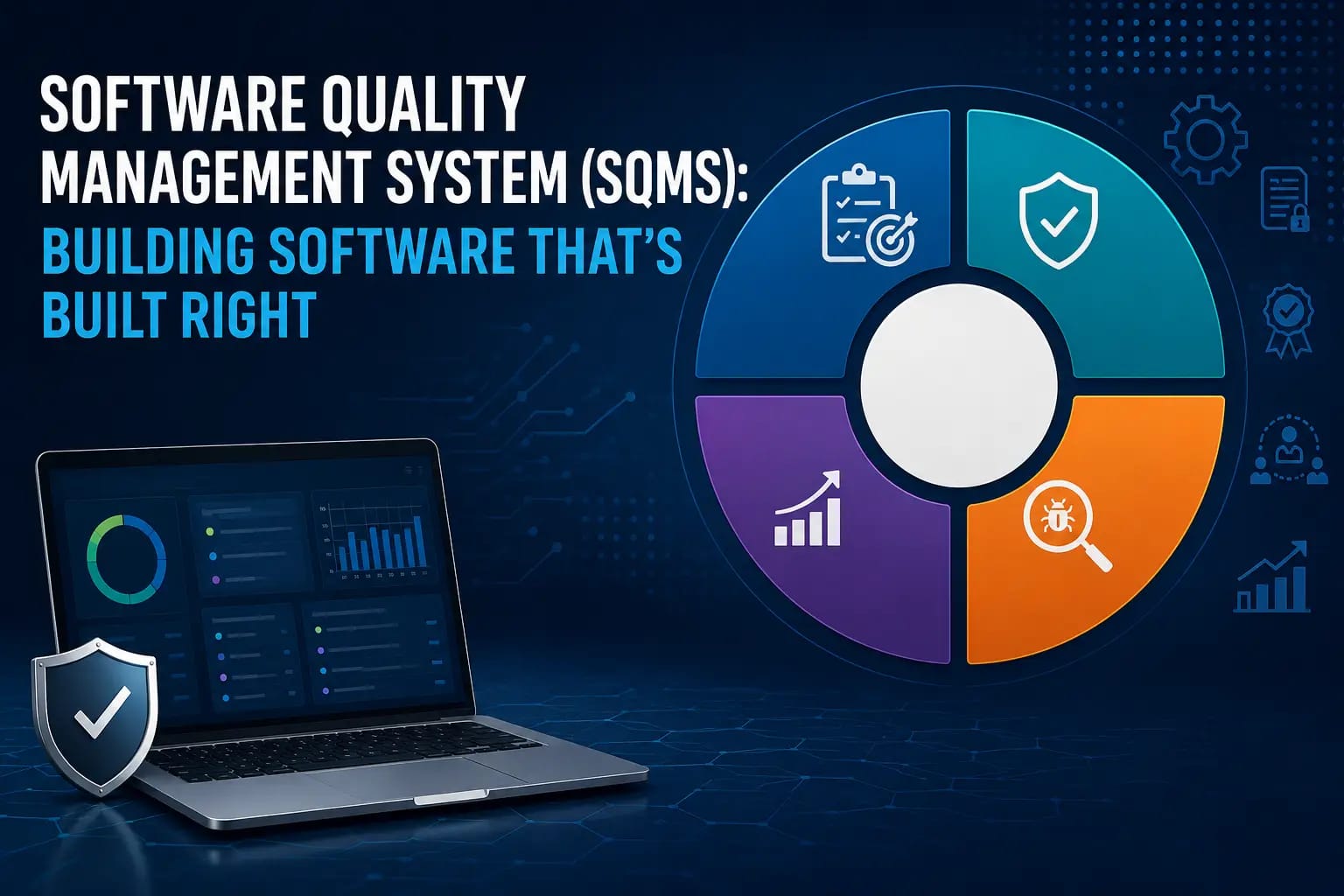
The Four Pillars of an Effective SQMS
Quality Planning: Before a single line of code is written, quality objectives, standards, and acceptance criteria must be defined. Quality planning establishes what "done right" looks like for a given product or release, ensuring every team member works toward the same measurable outcomes.
Quality Assurance (QA): QA is about process, not just product. It provides confidence that quality requirements will be fulfilled by auditing development processes, enforcing standards, and identifying systemic weaknesses before they produce defects. QA is preventive by nature it stops problems from entering the pipeline.
Quality Control (QC): Where QA focuses on process, QC focuses on product. Through structured testing, code reviews, and validation activities, QC identifies and resolves defects before software reaches end users. It is the verification layer that confirms what was built matches what was intended.
Continuous Improvement: An SQMS is not a static framework. Ongoing assessment of quality metrics, defect trends, and process performance drives iterative refinement reducing error rates, improving efficiency, and ensuring the system evolves alongside the organization's needs and the regulatory landscape it operates in.
Core Functions of Modern QMS Software
Today's QMS platforms are typically cloud-based, centralizing quality activities that were previously scattered across spreadsheets, email threads, and disconnected tools. The operational impact is significant for real-time visibility, automated workflows, and a single source of truth for quality data.
Document Control: Policies, SOPs, validation protocols, and technical documentation are managed, version-controlled, and accessible to the right people at the right time. No more hunting for the current version or discovering that an outdated procedure was followed during an audit.
Audit Management: Internal and external audits are planned, scheduled, executed, and tracked within the platform. Findings are logged, assigned, and followed through to closure with a complete audit trail that satisfies even the most rigorous regulatory inspectors.
Non-Conformance & CAPA: When something goes wrong, the system captures it immediately. Root-cause analysis, corrective action assignment, effectiveness verification all managed in one workflow that prevents issues from recurring and documents every step of the resolution for compliance purposes.
Supplier Quality Management: Software quality doesn't exist in isolation. Third-party components, outsourced development, and vendor tools all introduce quality risk. A robust SQMS evaluates, qualifies, and continuously monitors supplier performance, closing a vulnerability that many organizations leave unmanaged.
The QMS Software Landscape
Several platforms have emerged as industry standards for software and product quality management. MasterControl Quality Excellence is widely recognized for its robust document and process control capabilities, particularly in regulated industries. ETQ Reliance offers flexible, cloud-based quality management suited to complex, multi-site organizations. Veeva Quality Cloud is purpose-built for life sciences, where regulatory compliance requirements are among the most demanding in any sector.
Compliance Quest, built natively on Salesforce, appeals to organizations already invested in that ecosystem. Ideagen Quality Management focuses on compliance and risk management across heavily regulated verticals. Siemens Opcenter X Quality is tailored specifically for manufacturing quality processes, with deep integration into production operations.
Each of these platforms reflects a different philosophy and serves a different organizational profile. The right choice depends on industry context, regulatory obligations, integration requirements, and the maturity of the quality function within the organization.
What a Well-Implemented SQMS Delivers
The business case for investing in a Software Quality Management System is straightforward, but the outcomes go beyond the obvious.
Defect rates drop, and with them, the cost of rework, emergency patches, and customer-facing incidents. Compliance with standards like ISO 9001 becomes a byproduct of normal operations rather than a scramble before every audit. Customer satisfaction improves not because teams try harder, but because the system makes quality the path of least resistance.
Less visibly but equally important, a mature SQMS creates organizational memory. Quality processes, lessons learned, and resolution histories are captured and searchable, so teams don't repeat the same mistakes as the organization grows or personnel changes.
Why AmpleLogic
AmpleLogic works with organizations in pharma, life sciences, and technology-driven manufacturing to design, implement, and optimize Software Quality Management Systems that match both regulatory reality and operational ambition.
We understand that quality frameworks only deliver value when they're actually used so our implementations prioritize adoption, configurability, and integration with the tools your teams already depend on. We align QMS platform selection and deployment to your compliance requirements, your development methodology, and your long-term quality roadmap.
If your current approach to software quality relies on tribal knowledge, disconnected tools, or manual processes that won't survive an audit, AmpleLogic can help you build something more durable.
Connect with an AmpleLogic specialist to assess your current quality maturity and identify the right SQMS approach for your organization.


