The Real Problems With Paper Batch Records
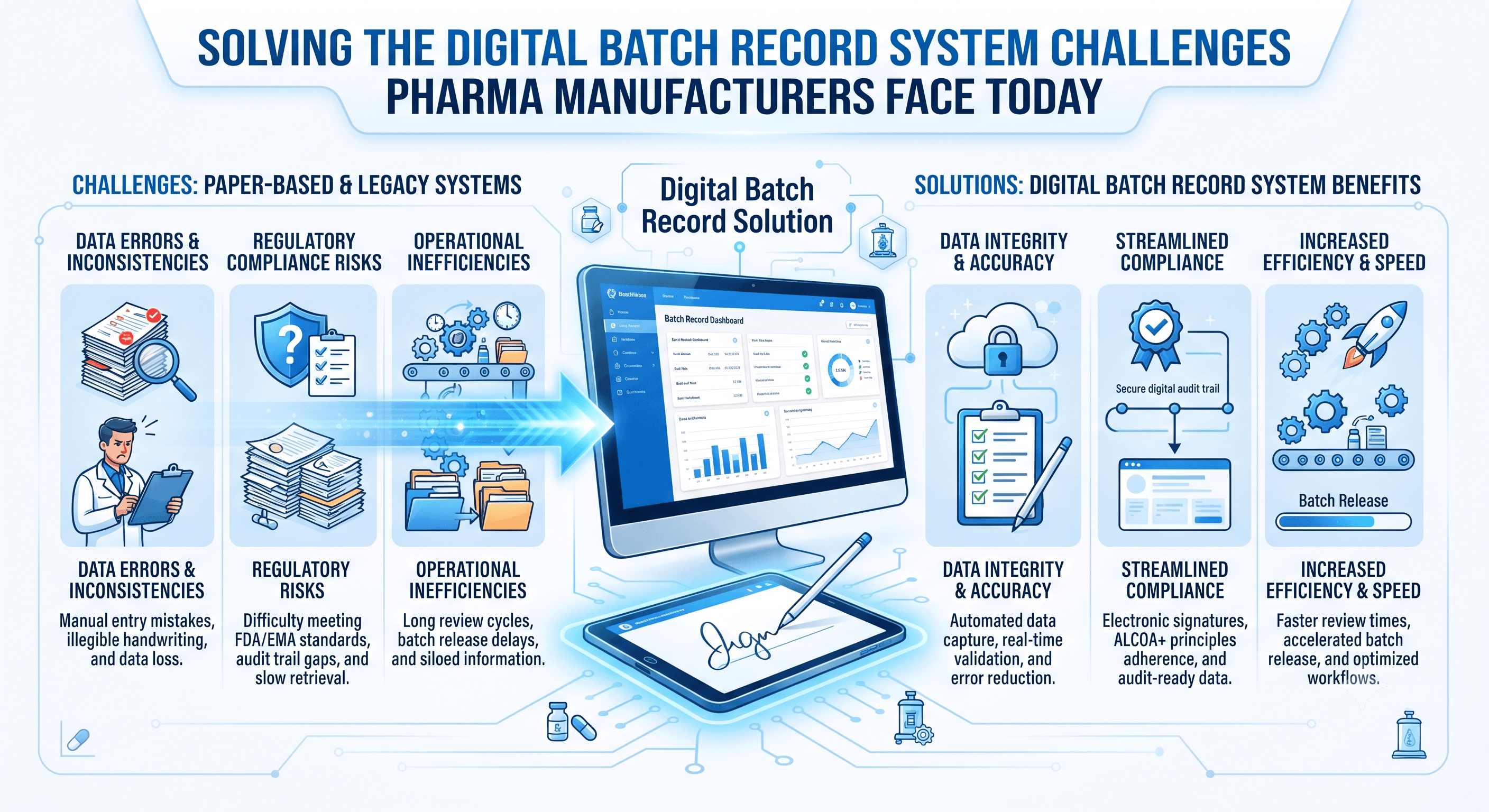
Ask anyone who's pulled a night shift in a pharma plant and they'll tell you the same thing - paper doesn't forgive mistakes. One missed initial, one smudged entry, a page filed out of order, and batch release can sit stuck for days. Now multiply that across dozens of batches every month. The hours lost to rework pile up fast, faster than most plants like to admit.
A few pain points keep showing up, no matter which facility you ask:
Transcription errors. Data gets typed in twice, sometimes three times, across different systems - and somewhere in there, mistakes slip through that nobody notices until an audit does.
Slow batch release. Every line on paper needs a human to review it manually, which drags out timelines and pushes product further from market than it needs to be.
Limited visibility. Ask a plant manager where a batch actually stands and there's a decent chance they'll have to walk over and check the folder themselves.
Compliance risk. The FDA, the EMA - they expect a level of data integrity paper was never built to deliver. Missing signatures, backdated entries, handwriting nobody can decipher - these turn up in warning letters more often than they should.
Storage and retrieval headaches. Archive rooms stacked with years of paper turn audits and investigations into slow, frustrating scavenger hunts.
What a Digital Batch Record System Actually Fixes
A digital batch record system isn't just paper pushed onto a screen. Done properly, it changes how manufacturing data gets captured, verified, and released in the first place. With eBMR software, records get built electronically off validated templates, and the system itself won't let an operator move forward if a step gets skipped or a value drifts outside spec.
That one feature - in-process control wipes out a huge chunk of the errors that used to slide through on paper unnoticed. Nothing moves ahead with an incomplete or incorrect entry. Problems get caught right at the point of entry, not three weeks later when someone's finally reviewing the batch.
Companies that make the switch tend to report a fairly similar list of gains:
Faster batch release. Data gets captured right the first time, so review by exception actually becomes realistic. QA can spend its time on flagged deviations instead of reading every single line.
Full audit trails. Every action, every timestamp, every user - logged automatically, which covers 21 CFR Part 11 and EU Annex 11 without anyone doing extra paperwork on the side.
Better integration. A decent eBMR system talks to LIMS, ERP, MES, and SCADA on its own, so data moves between systems instead of getting re-typed by hand each time.
Real-time visibility. Plant heads and quality leads pull up batch status from a dashboard rather than chasing paperwork across departments.
Less storage burden. Records sit in a validated digital repository, searchable in seconds instead of buried somewhere in a box.
Why This Matters More Now
Scrutiny around data integrity keeps getting tighter, year over year. Inspectors already know what they're hunting for - manual manipulation, backdated entries, records that just don't line up right. A digital batch record system, with real access controls and a proper audit trail, takes that guesswork off the table for good. It also leaves manufacturers standing on firmer ground during an inspection, since the system can pull up exactly who did what and when, down to the minute.
There's a workforce side to this too, and it's easy to overlook. Younger plant staff grew up surrounded by digital tools. They expect something that walks them through a process, not a blank paper form that assumes they'll remember every step off the top of their head. An electronic batch record system with built-in prompts shortens training time and cuts down on the mistakes that come from someone still finding their footing.
Making the Shift Without Disrupting Operations
Replacing paper batch records all at once can feel like too much, especially at a facility running several product lines side by side. Most plants that manage it do it in stages instead. Start with whatever's highest-risk or highest-volume, validate the eBMR workflows against the SOPs already sitting on the shelf, then work outward from there. A decent eBMR platform can be configured to match the batch record formats already in use, right from day one, so operators aren't stuck relearning their entire job overnight.
Closing Thoughts
The pressure on pharma manufacturers to eliminate paper-based inefficiencies is not going away. Regulators expect stronger data integrity, customers expect faster turnaround, and internal teams need better visibility into what is happening on the floor. An eBMR software solution, built as a true digital batch record system, addresses these pressures directly rather than just digitizing old problems.
For manufacturers still weighing the switch, the question is no longer whether to move away from paper. It is how quickly the transition can happen without disrupting production.


