Intelligent QC Planning
Help pharmaceutical QC teams plan testing workload from sample demand, test requirements, due dates, analyst availability, and instrument constraints — instead of coordinating everything in spreadsheets.
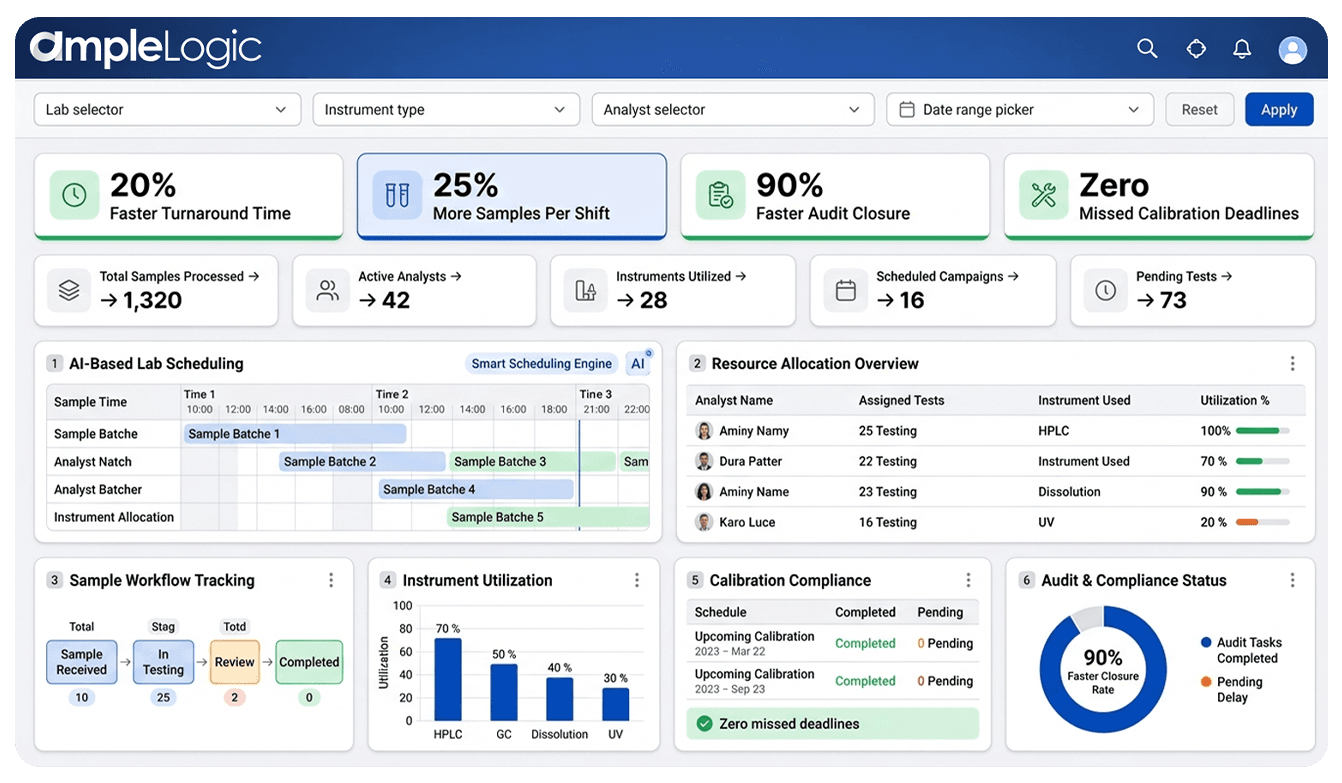
Replace reactive spreadsheet planning with capacity-aware QC plans
QC laboratories face rising sample volumes, competing batch-release priorities, stability pulls, and limited analyst and instrument capacity. When planning lives in spreadsheets and side conversations, due dates slip and bottlenecks appear too late.
Intelligent QC Planning in AmpleLogic QC Planning and Scheduling brings sample demand, testing requirements, priority, and capacity into one planning view so laboratory managers can decide what needs attention before schedules are locked.
Planning answers what must be done and in what order. Scheduling then decides when work runs and which resources perform it — keeping those decisions connected but distinct.
Explore AmpleLogic QC Planning and SchedulingWhat Intelligent QC Planning enables
Practical capabilities QC and laboratory teams use to improve planning, scheduling and execution.
Intelligent Workload Planning
Build QC plans from incoming sample demand and defined testing requirements across products and methods.
Sample Prioritization
Rank work by business and quality priority so batch-release and urgent testing stay visible in the plan.
Test Requirement Analysis
Translate registered samples and test plans into a clear view of required analytical work.
Capacity-Aware Planning
Evaluate laboratory capacity before committing plans that the lab cannot realistically execute.
Analyst & Instrument Awareness
Consider analyst availability and instrument dependencies when shaping the QC plan.
Centralized Planning Visibility
Give managers one place to review planned workload, adjust priorities, and prepare for scheduling.
How this capability fits the QC planning and scheduling lifecycle
From demand planning and scheduling through campaigns, resource allocation and laboratory visibility.
Step 01
Sample demand
Capture incoming samples and expected testing volume from LIMS, batch triggers, or planned demand.
Step 02
Test requirements
Identify methods, test lists, and complexity that define the laboratory workload.
Step 03
Priority assessment
Assess due dates and business priority for batch release, stability, and routine testing.
Step 04
Capacity evaluation
Compare demand against analyst availability, instrument capacity, and testing complexity.
Step 05
QC plan
Create a structured QC plan that defines what needs to be scheduled next.
Step 06
Review & adjustment
Review the plan with lab leads, adjust priorities, and hand off to automated scheduling.
Outcomes QC laboratory teams can expect
Benefits focused on this QC planning and scheduling capability.
Reduce manual planning effort
Spend less time reconciling spreadsheets and more time deciding what the laboratory should prioritize.
Improve test prioritization
Keep release-critical and time-sensitive work visible before capacity is overcommitted.
Support better resource allocation
Plan with analyst and instrument constraints in view instead of discovering conflicts later.
Strengthen plan-to-schedule handoff
Give schedulers an approved demand picture instead of fragmented requests.
Built to support regulated pharmaceutical operations
Controls and practices most relevant to this QC laboratory capability.
Controlled planning records
Maintain visibility into planned workload decisions that feed laboratory schedules.
Role-based access
Limit planning and adjustment activities to authorized QC and laboratory roles.
Traceable adjustments
Support auditability when priorities and plans change under operational pressure.
How intelligent planning connects to the rest of QC operations
QC plans feed automated scheduling, campaign execution, resource optimization, and laboratory visibility.
Into automated scheduling
Convert approved plans into practical schedules with resource assignment.
Into resource optimization
Use planned demand to evaluate analyst and instrument allocation options.
Into laboratory visibility
Show planned versus active workload in operational dashboards.
Our Global Offices
We are where you need us to be. Connecting globally, delivering locally.
India

Melange Tower, 2nd Floor, Wing-C, Patrika Nagar, HITEC City, Madhapur, Hyderabad - 500081, Telangana, India
United States (Dallas)

17330 Preston Road Suite 200D, Dallas, TX, 75252
Canada (North York, Toronto)

5255 Yonge Street Suite 201, North York, ON, M2N 6P4
Australia (Melbourne)

Level 14, 330 Collins Street, Melbourne, VIC, 3000
South Korea (Daegu)

Daegu Trade Centre, 8/F. 489, Dongdaegu-ro, Daegu, 41256
Ireland (Dublin)

Block 1, Blanchardstown Corporate Park Ballycoolen Road, Dublin, D15 AKK1
Singapore

1 Scotts Road, #24-10 Shaw Centre, Singapore, Singapore, 228208
Stay Ahead in Life Sciences
Get the latest product updates, compliance news, and industry insights delivered to your inbox.