The pharmaceutical and life sciences industry is rapidly moving toward digital transformation, and Electronic Batch Manufacturing Record (eBMR) systems are becoming a critical part of this shift. Traditional paper based batch records are time consuming, difficult to maintain, and highly vulnerable to human errors. eBMR software helps manufacturers streamline production processes, improve compliance, reduce review cycles, and enhance operational efficiency.
However, implementing an eBMR solution is not always easy. Many pharmaceutical companies face technical, operational, and organizational challenges during implementation. Without proper planning and the right technology partner, these challenges can delay deployment and reduce the expected business benefits.
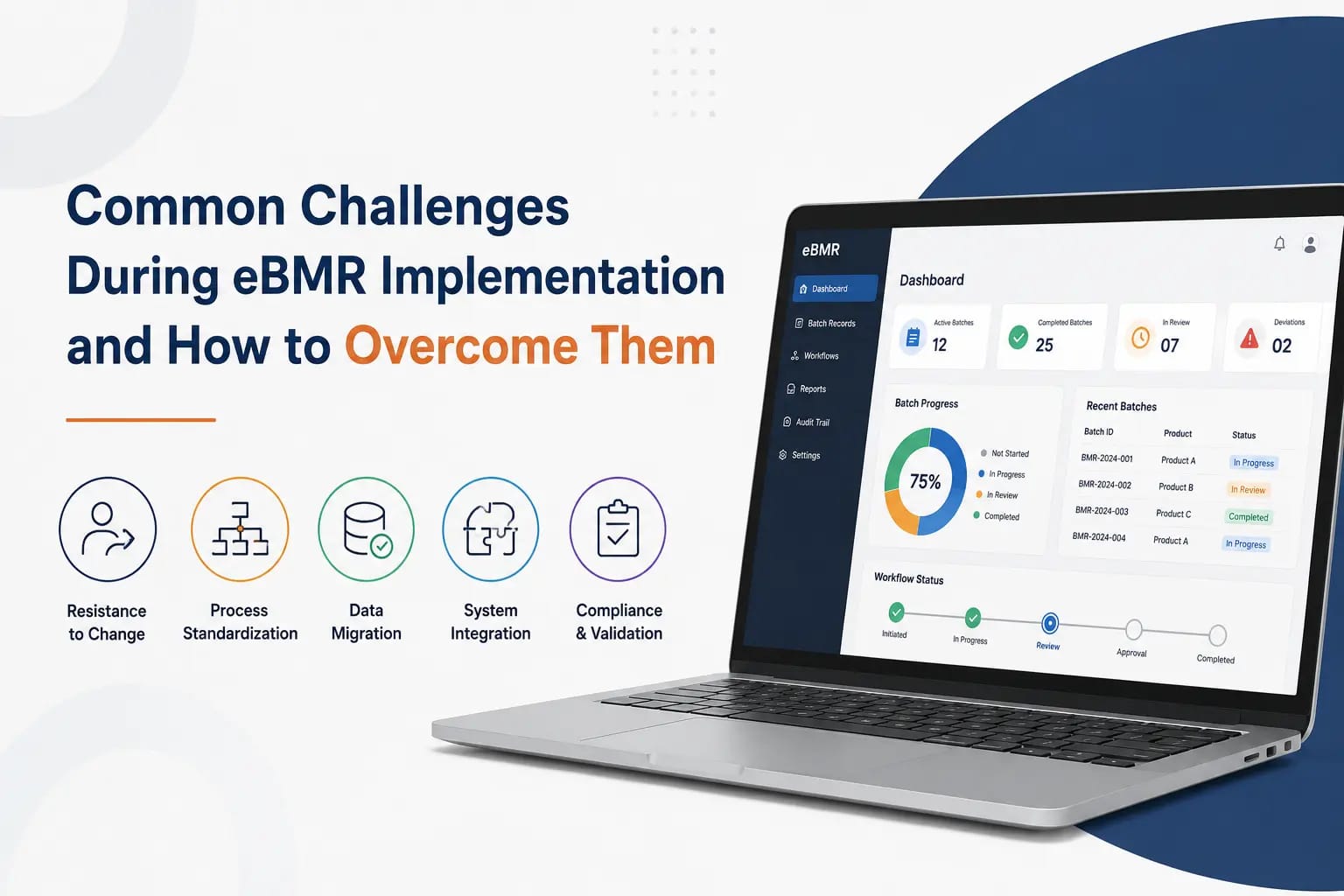
In this blog, we will explore the most common challenges during eBMR implementation and practical ways to overcome them successfully.
What is eBMR?
Electronic Batch Manufacturing Record (eBMR) software digitizes and automates the entire batch manufacturing documentation process. It captures manufacturing instructions, process parameters, equipment details, operator actions, approvals, and quality checks electronically in real time.
An advanced eBMR platform helps pharmaceutical manufacturers:
Reduce manual documentation errors
Improve batch review and release time
Ensure data integrity compliance
Minimize deviations and rework
Increase operational visibility
Maintain regulatory compliance
Modern eBMR systems also integrate with LIMS, ERP, MES, SCADA, and eQMS platforms for seamless manufacturing operations.
Why eBMR Implementation Becomes Challenging
Many organizations underestimate the complexity of moving from paper based processes to fully digital batch manufacturing. eBMR implementation impacts production, quality assurance, IT, engineering, validation, and regulatory teams simultaneously.
The challenge is not just implementing software. It is redesigning manufacturing workflows into a compliant and standardized digital environment.
Let us look at the most common implementation challenges.
1. Resistance to Change from Employees
One of the biggest challenges during eBMR implementation is user resistance. Operators and manufacturing staff who are comfortable with paper based systems may hesitate to adopt digital workflows.
Employees often worry about:
Learning new technology
Increased monitoring
More complex workflows
Fear of operational mistakes
How to Overcome It
Organizations should involve end users early in the implementation process. Conduct workshops, collect feedback, and clearly explain how eBMR simplifies daily operations.
Training programs should focus on:
Hands on learning
User friendly navigation
Department specific training
Ongoing support after deployment
Solutions like AmpleLogic eBMR Software are designed with configurable and user friendly workflows that help improve user adoption and reduce operational complexity.
2. Poor Process Standardization
Many pharmaceutical companies follow different manufacturing practices across plants or products. If processes are not standardized before implementation, eBMR configuration becomes difficult and inconsistent.
This can result in:
Workflow confusion
Frequent process revisions
Validation delays
Increased project costs
How to Overcome It
Before implementing eBMR, organizations should standardize:
Batch manufacturing workflows
SOP structures
Approval processes
Data entry formats
Exception management procedures
AmpleLogic eBMR enables configurable workflow standardization across manufacturing operations, helping organizations achieve consistency and compliance.
3. Data Migration Challenges
Migrating historical paper records and legacy system data into a new eBMR platform is often complicated and time consuming.
Common issues include:
Incomplete records
Duplicate entries
Inconsistent data formats
Missing batch history
How to Overcome It
A structured data migration strategy is essential.
Best practices include:
Cleansing legacy data before migration
Validating migrated records
Prioritizing critical production data
Using automated migration tools when possible
AmpleLogic supports secure and structured data migration approaches that help pharmaceutical companies reduce migration risks and maintain data accuracy.
4. Integration with Existing Systems
Modern pharmaceutical manufacturing relies on multiple digital systems such as ERP, LIMS, MES, SCADA, and quality management software. Integrating all these systems with eBMR can be technically challenging.
Without proper integration:
Data silos increase
Manual entries continue
Real time monitoring becomes difficult
Compliance risks grow
How to Overcome It
Organizations should choose an eBMR platform that supports seamless integration through APIs and configurable interfaces.
Integration planning should include:
Data mapping
Interface testing
Security validation
Workflow synchronization
AmpleLogic offers integrated digital manufacturing solutions that connect eBMR with enterprise systems for better operational visibility and process efficiency.
5. Regulatory Compliance and Validation Complexity
Pharmaceutical manufacturers must comply with strict global regulations including:
FDA 21 CFR Part 11
EU Annex 11
GMP requirements
ALCOA+ data integrity principles
Validation and compliance documentation often become major implementation challenges.
How to Overcome It
Validation activities should be planned from the beginning of the project rather than treated as a final step.
A strong validation strategy should include:
User Requirement Specifications (URS)
Functional Requirement Specifications (FRS)
Risk assessments
Installation Qualification (IQ)
Operational Qualification (OQ)
Performance Qualification (PQ)
AmpleLogic eBMR is designed with compliance ready architecture, audit trails, electronic signatures, and validation support to simplify regulatory readiness.
6. Inadequate User Training
Even advanced eBMR systems can fail if employees are not properly trained. Poor training can lead to:
Incorrect data entry
Workflow delays
Increased deviations
Compliance issues
How to Overcome It
Organizations should conduct structured training programs for all departments involved in manufacturing and quality processes.
Training should include:
Practical demonstrations
Scenario based sessions
Refresher programs
User manuals and SOPs
Technical support assistance
AmpleLogic provides implementation guidance and user support to help organizations achieve smoother eBMR adoption.
7. Budget and Timeline Overruns
Many eBMR projects exceed budgets and planned timelines due to unclear requirements or excessive customization requests.
Common causes include:
Scope expansion
Delayed approvals
Integration challenges
Frequent process changes
How to Overcome It
A phased implementation strategy often works best.
Organizations can begin with:
Pilot manufacturing lines
High priority products
Limited process scope
Then gradually expand implementation across facilities.
AmpleLogic helps pharmaceutical companies accelerate deployment through configurable workflows and scalable implementation approaches.
8. Limited Real Time Visibility
Some organizations implement basic digital records without gaining meaningful production insights. This limits operational improvement opportunities.
Without advanced monitoring capabilities:
Batch tracking becomes difficult
Deviation trends are missed
Process optimization slows down
Decision making becomes reactive
How to Overcome It
Modern eBMR systems should provide:
Real time dashboards
Automated notifications
Batch progress monitoring
Analytics and reporting
Process visibility tools
AmpleLogic eBMR supports real time manufacturing visibility and digital process control, helping organizations improve operational performance and compliance management.
Why AmpleLogic eBMR is the Right Choice for Pharma Manufacturers
Choosing the right technology partner is critical for successful eBMR implementation. Pharmaceutical companies need a solution that combines compliance, flexibility, scalability, and ease of use.
AmpleLogic eBMR Software is specifically designed for regulated pharmaceutical and life sciences industries. The platform helps organizations digitize batch manufacturing operations while ensuring compliance with global regulatory standards.
Key capabilities include:
Electronic batch record management
Configurable workflows
Electronic signatures and audit trails
Real time batch monitoring
ERP, LIMS, and MES integration
GMP compliant architecture
Data integrity support
Faster batch review and release
By adopting AmpleLogic eBMR, pharmaceutical manufacturers can reduce manual errors, improve productivity, accelerate compliance readiness, and support smart manufacturing initiatives.
Conclusion
eBMR implementation is a major step toward digital manufacturing transformation in the pharmaceutical industry. Although challenges such as employee resistance, system integration, validation complexity, and process standardization are common, they can be effectively managed with proper planning and the right technology platform.
Organizations that invest in user training, standardized workflows, compliance focused implementation, and scalable digital solutions can achieve significant improvements in efficiency, compliance, and operational visibility.
As pharmaceutical manufacturing continues to evolve toward Industry 4.0, advanced eBMR platforms like AmpleLogic eBMR will play a vital role in enabling smarter, faster, and more compliant manufacturing operations.


