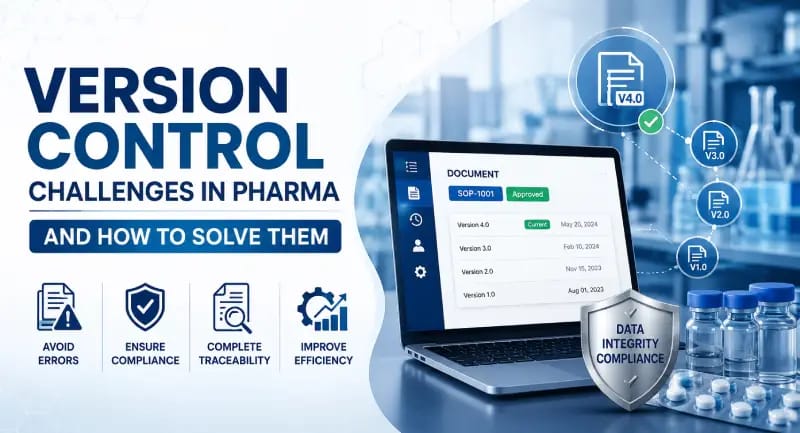
The pharmaceutical industry operates in a highly regulated environment where accuracy, compliance, and data integrity are critical. Every document, record, standard operating procedure (SOP), specification, and quality document must be maintained with proper version control. Even a small mistake in managing document versions can lead to compliance issues, audit observations, product quality risks, and operational inefficiencies.
Version control is the process of tracking changes made to documents and ensuring that employees always use the latest approved version. While it sounds simple, many pharmaceutical organizations continue to face challenges in managing document versions effectively.
In this blog, we will discuss the common version control challenges in pharmaceutical companies and explore practical solutions to overcome them.
What is Version Control in Pharma?
Version control refers to the systematic management of document revisions throughout their lifecycle. It ensures that only the current approved version of a document is available for use while maintaining a complete history of previous versions for reference and audit purposes.
Version control applies to various pharmaceutical documents, including:
Standard Operating Procedures (SOPs)
Batch Manufacturing Records (BMRs)
Quality Manuals
Validation Documents
Training Materials
Specifications
Regulatory Documents
Change Control Records
Proper version control supports compliance with regulatory requirements such as FDA 21 CFR Part 11, EU GMP Annex 11, and other global quality standards.
Common Version Control Challenges in Pharma
1. Multiple Versions Stored in Different Locations
One of the most common problems is storing documents across multiple folders, shared drives, emails, and local systems. Employees may accidentally access outdated versions without realizing it.
This creates confusion and increases the risk of using obsolete procedures during manufacturing or quality operations.
2. Lack of Document Visibility
Many organizations struggle to track which version is currently approved and who has access to it. Without a centralized system, employees may spend significant time searching for the correct document.
This reduces productivity and increases the chances of human error.
3. Manual Revision Tracking
Organizations that rely on paper-based systems or spreadsheets often track revisions manually. This approach is time-consuming and prone to mistakes.
Missing revision details, incorrect version numbers, or incomplete change records can create compliance concerns during audits.
4. Uncontrolled Document Distribution
When documents are distributed through email or printed copies, it becomes difficult to ensure that everyone is using the latest version.
Employees may continue working with outdated procedures, which can directly impact product quality and regulatory compliance.
5. Audit and Inspection Difficulties
Regulatory authorities expect companies to provide complete document histories during inspections. If version records are incomplete or difficult to retrieve, organizations may face audit observations and compliance risks.
Maintaining accurate document histories manually can be challenging, especially in large pharmaceutical companies.
6. Delayed Approval Processes
Document revisions often require reviews and approvals from multiple departments. Manual approval processes can create delays and bottlenecks.
As a result, important updates may take longer to implement, affecting operational efficiency and compliance readiness.
Impact of Poor Version Control
Ineffective version control can lead to several operational and regulatory issues, including:
Use of obsolete documents
Increased compliance risks
Audit findings and regulatory observations
Data integrity concerns
Process inconsistencies
Reduced employee productivity
Delayed document approvals
Increased risk of manufacturing errors
For pharmaceutical companies, these risks can affect both product quality and business reputation.
How to Solve Version Control Challenges
Implement a Centralized Document Management System
A centralized Document Management System (DMS) provides a single source of truth for all quality and compliance documents.
Instead of storing files across multiple locations, organizations can maintain all documents in one secure platform. Employees can easily access the latest approved version while older versions remain archived for audit purposes.
This significantly reduces confusion and improves document control.
Automate Version Tracking
Modern electronic document management systems automatically assign version numbers whenever a document is revised.
The system records:
Revision date
Author details
Review comments
Approval status
Change history
Automation eliminates manual errors and provides a complete audit trail for regulatory inspections.
Establish Controlled Access
Role-based access control ensures that only authorized personnel can create, edit, review, or approve documents.
Employees can view documents relevant to their responsibilities while maintaining document security and data integrity.
This helps prevent unauthorized modifications and ensures compliance with regulatory requirements.
Use Electronic Workflows
Electronic workflows streamline document review and approval processes.
Instead of sending documents through emails, the system automatically routes documents to designated reviewers and approvers. Notifications and reminders help keep the process moving efficiently.
This reduces approval delays and improves overall document lifecycle management.
Maintain Comprehensive Audit Trails
A robust version control system should maintain a complete audit trail of every document activity.
Audit trails provide visibility into:
Who created the document
Who modified it
What changes were made
When approvals occurred
Which version is currently active
These records are essential for demonstrating compliance during inspections.
Ensure Employee Training
Even the best system will not be effective without proper user training.
Employees should understand:
How version control works
How to access approved documents
How to manage document revisions
Why document compliance is important
Regular training helps ensure consistent adoption of version control procedures across the organization.
The Role of Digital DMS Solutions
Digital Document Management Systems play a crucial role in overcoming version control challenges. Advanced DMS platforms offer features such as:
Automated version management
Electronic signatures
Document lifecycle workflows
Audit trails
Change control integration
Secure document storage
Regulatory compliance support
These capabilities help pharmaceutical organizations maintain compliance while improving efficiency and reducing manual effort.
Solutions like AmpleLogic DMS enable organizations to manage document versions effectively while supporting FDA 21 CFR Part 11 and global GMP requirements.
Conclusion
Version control is a fundamental component of pharmaceutical quality management. Poor document control can result in compliance issues, operational inefficiencies, and increased business risk. As regulatory expectations continue to grow, organizations must adopt reliable systems that ensure document accuracy, traceability, and accessibility.
By implementing a centralized Document Management System, automating revision tracking, establishing controlled workflows, and maintaining complete audit trails, pharmaceutical companies can eliminate common version control challenges and strengthen their compliance framework.
Investing in a modern digital DMS not only improves document management but also supports long-term operational excellence, regulatory readiness, and product quality.


