QC Laboratory Operations
Digitize QC lab logbooks for physical inspections, sanitization, column lifecycle, instrument usage, reagent preparation, media preparation, and growth promotion testing — with full laboratory traceability.
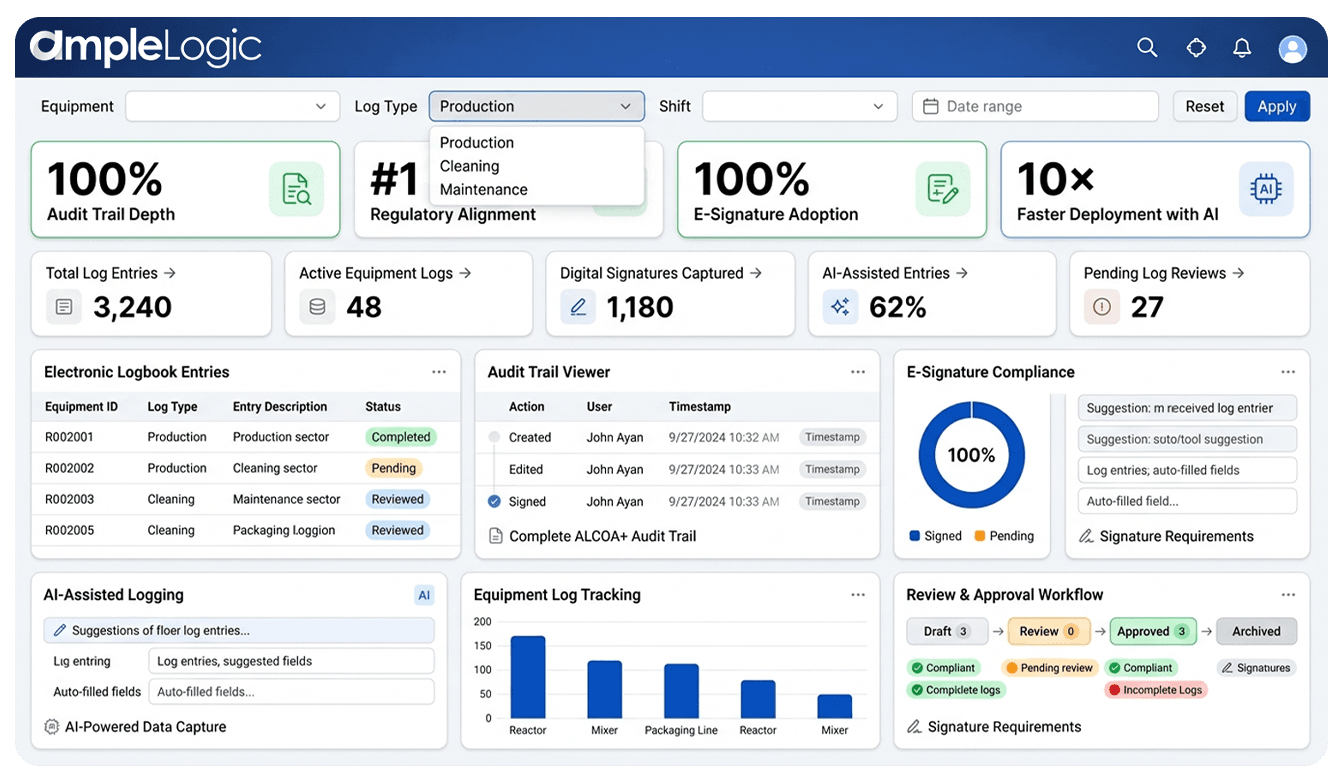
Capture QC laboratory work that structured LIMS workflows often leave on paper
QC laboratories still rely on paper or local spreadsheets for physical inspections, sanitization, reagent and media preparation, column lifecycle, and instrument usage logs. Those records are hard to search during investigations and easy to fragment across benches.
QC Laboratory Operations in AmpleLogic Electronic Logbook System bridges the LIMS gap with dedicated QC lab logbook software for the observational and preparation activities surrounding analytical work.
Role-based logbooks, checklists with interlocking, QR/barcode scanning, and Part 11 e-signature workflows help laboratories keep preparation and usage records attributable and review-ready.
Explore AmpleLogic Electronic Logbook SystemWhat QC Laboratory Operations enables
Practical capabilities manufacturing, QC, warehouse, and quality teams use to digitize GxP logbooks.
QC Lab Logbook Software
Document physical inspections, sanitization, and laboratory housekeeping that sit outside core LIMS sample workflows.
Column & Instrument Usage Logs
Track column lifecycle and instrument usage so analytical support records stay connected to laboratory activity.
Reagent Preparation & Expiry
Record reagent preparation, standardization, and expiry with controlled electronic entries.
Media Preparation & Growth Promotion
Document media preparation and growth promotion testing with attributable contemporaneous records.
Checklists & Interlocking
Enforce step-by-step laboratory tasks with interlocking logic to prevent out-of-sequence entries.
QR / Barcode Scanning
Scan instruments, reagents, and location tags for faster identification and fewer manual entry errors.
How this capability fits the electronic logbook lifecycle
From template configuration and contemporaneous capture through approvals, integrations, and quality follow-through.
Step 01
Define lab logbooks
Configure QC templates for inspections, sanitization, reagents, media, columns, and instruments.
Step 02
Assign roles
Give analysts, supervisors, and QA the right view, edit, and approval permissions.
Step 03
Execute checklists
Complete interlocking checklists for preparation, usage, and inspection activities.
Step 04
Capture supporting context
Log observations, exceptions, and instrument or column usage at the point of work.
Step 05
Approve critical steps
Apply electronic signatures where laboratory and quality procedures require controlled approval.
Step 06
Review & synchronize
Use dashboards and LIMS integration points to keep laboratory context available for investigations.
Outcomes GxP teams can expect
Benefits focused on this Electronic Logbook System capability.
Close paper gaps around LIMS
Digitize the preparation, inspection, and usage logs that often remain outside sample result systems.
Improve laboratory traceability
Keep reagent, media, column, and instrument history searchable for audits and investigations.
Reduce out-of-sequence work
Use checklists and interlocking to guide required laboratory steps before entries are completed.
Speed identification on the bench
Scan barcodes and QR tags instead of retyping instrument or material identifiers.
Built to support regulated pharmaceutical operations
Controls and practices most relevant to this electronic logbook capability.
Controlled laboratory records
Maintain attributable QC logbook entries with immutable audit trail support.
Role-based laboratory access
Limit edit and approval rights to authorized QC, supervisor, and quality roles.
Electronic signature support
Apply Part 11-aligned e-signature workflows to critical laboratory approvals.
QC logbooks between LIMS and plant systems
QC laboratory operations connect observational lab records with LIMS, area/equipment context, and quality workflows.
With LIMS
Synchronize laboratory context such as instrument logs and QC sample tracking where integration is configured.
With area & equipment logs
Reference instrument calibration, usage, and environmental context during laboratory work.
With quality & compliance
Escalate laboratory exceptions into deviation, CAPA, or change-control narratives.
Nuestras Oficinas Globales
Estamos donde nos necesita. Conectamos a nivel global y entregamos a nivel local.
India

Melange Tower, 2nd Floor, Wing-C, Patrika Nagar, HITEC City, Madhapur, Hyderabad - 500081, Telangana, India
Estados Unidos (Dallas)

17330 Preston Road Suite 200D, Dallas, TX, 75252
Canadá (North York, Toronto)

5255 Yonge Street Suite 201, North York, ON, M2N 6P4
Australia (Melbourne)

Level 14, 330 Collins Street, Melbourne, VIC, 3000
Corea del Sur (Daegu)

Daegu Trade Centre, 8/F. 489, Dongdaegu-ro, Daegu, 41256
Irlanda (Dublín)

Block 1, Blanchardstown Corporate Park Ballycoolen Road, Dublin, D15 AKK1
Singapur

1 Scotts Road, #24-10 Shaw Centre, Singapore, Singapore, 228208
Manténgase a la vanguardia en las ciencias biológicas
Reciba las últimas actualizaciones de productos, noticias sobre cumplimiento y conocimientos de la industria en su bandeja de entrada.