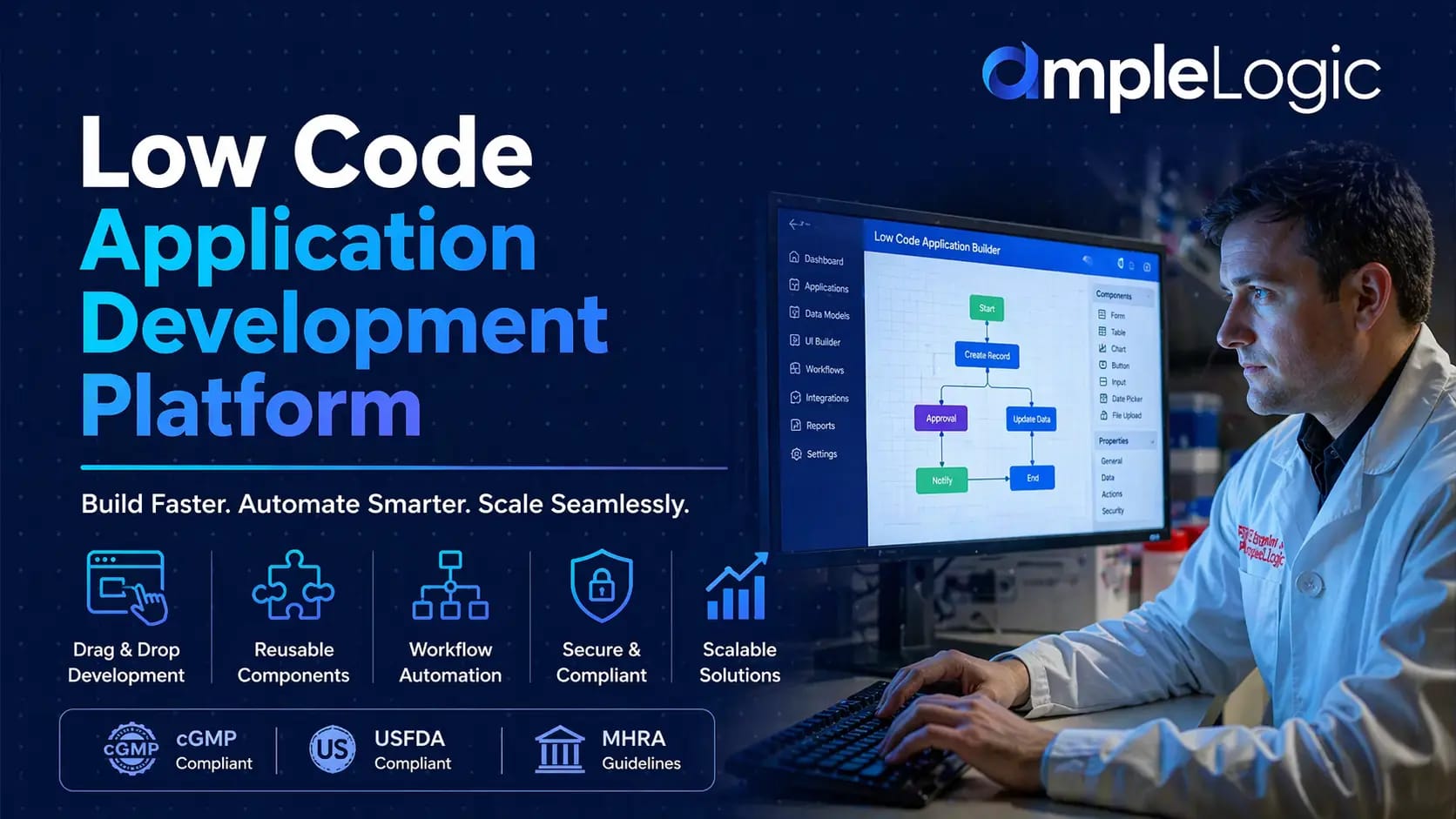
The pharmaceutical industry is undergoing rapid digital transformation, driven by the need for speed, compliance, and efficiency. Traditional software development often struggles to keep up with evolving business requirements. A low-code application development platform provides a faster, more flexible way to build and deploy applications while maintaining strict regulatory standards.
What is a Low-Code Application Development Platform?
A low-code platform is a modern development environment that allows users to create applications through visual interfaces, drag-and-drop tools, and reusable components. It reduces the need for extensive coding, enabling both developers and business users to collaborate effectively.
Why Low-Code Matters for Pharma
Pharmaceutical organizations must balance innovation with compliance. Low-code platforms address this challenge by offering:
Faster development cycles
Built-in compliance features
Reduced dependency on large development teams
Improved accuracy through automation
This makes it easier to digitize processes without compromising regulatory requirements.
Key Features of Low-Code Platforms
Modern low-code platforms come equipped with powerful capabilities:
Visual Development Tools: Simplify application design
Reusable Components: Speed up development
Workflow Automation: Streamline business processes
Integration Capabilities: Connect with ERP, LIMS, and other systems
Security & Compliance: Ensure data protection and regulatory adherence
Scalability: Support growing business needs
Use Cases in the Pharmaceutical Industry
Low-code platforms can transform multiple pharma operations:
Deviation and CAPA management
Document control and validation workflows
These use cases demonstrate how low code enables faster and more efficient operations.
Benefits of Low-Code Development
Adopting a low-code application platform offers several advantages:
Speed: Rapid application development and deployment
Cost Efficiency: Lower development and maintenance costs
Flexibility: Easy updates and customization
Improved Productivity: Faster response to business needs
Regulatory Compliance: Built-in support for industry standards
Low-Code vs Traditional Development
Traditional development involves lengthy coding, testing, and deployment cycles. Low-code platforms simplify these processes, enabling faster delivery and reducing complexity. This allows organizations to stay agile and competitive in a dynamic market.
Best Practices for Implementation
To maximize the benefits of low-code platforms:
Select a platform aligned with regulatory requirements
Establish governance and access controls
Train teams for effective adoption
Validate applications for compliance
Continuously monitor and optimize performance
How AmpleLogic Supports Low-Code Development
AmpleLogic provides advanced low-code application development platforms tailored for pharmaceutical and life sciences industries. Its solutions focus on compliance, scalability, and efficiency, enabling organizations to build robust applications quickly and securely.
By combining innovation with regulatory expertise, AmpleLogic helps businesses accelerate digital transformation while maintaining the highest standards of quality and compliance.
Low-code application development platforms are reshaping how pharmaceutical companies build and manage applications. By enabling faster development, improving efficiency, and ensuring compliance, they empower organizations to innovate and adapt in a competitive landscape. As digital transformation continues to evolve, low code will play a critical role in the future of pharma technology.


