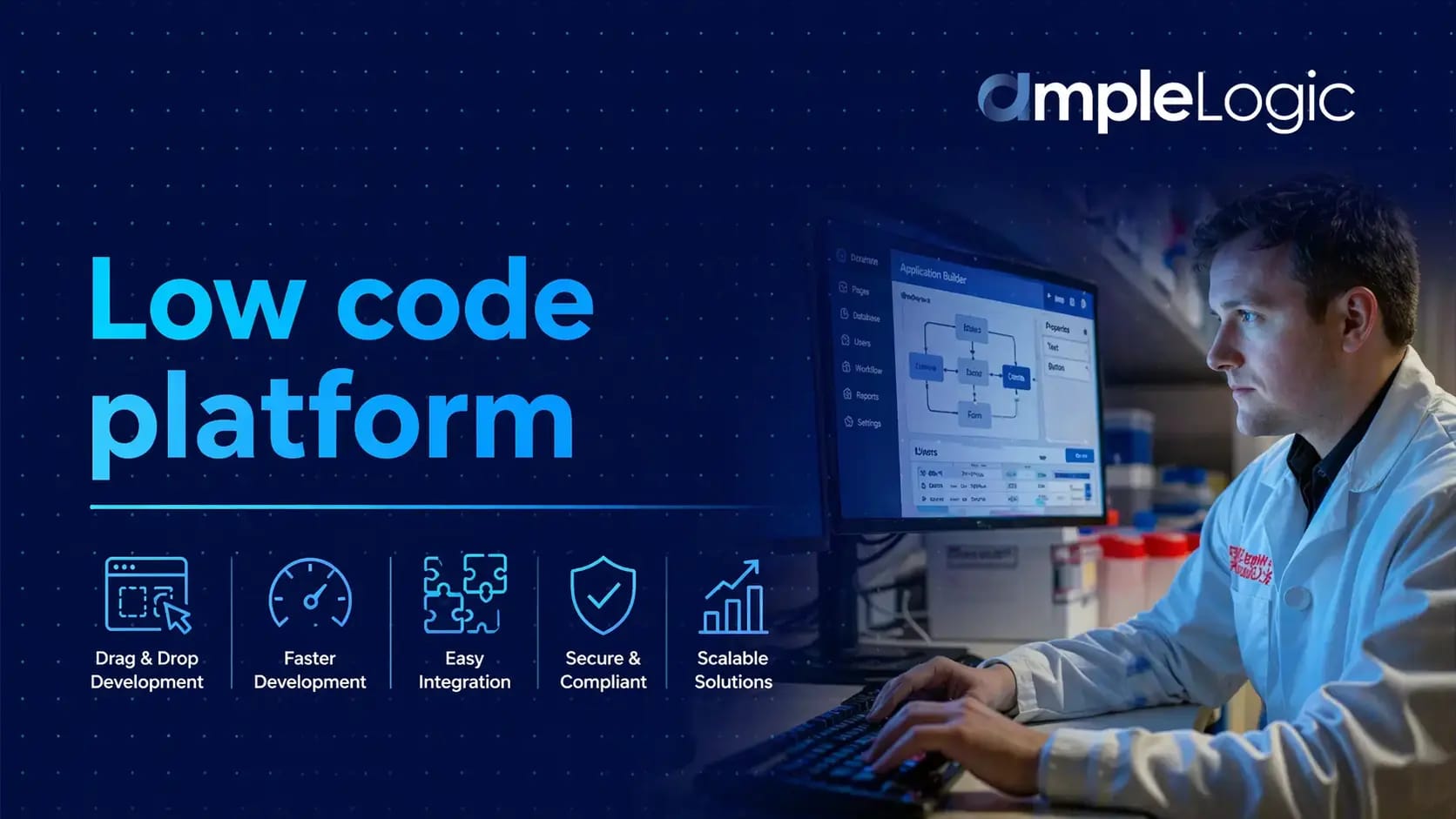
The pharmaceutical industry is rapidly evolving with increasing pressure to digitize operations while maintaining strict regulatory compliance. Traditional software development methods often require significant time, cost, and technical expertise. This is where low-code platforms are making a major impact by simplifying application development and accelerating innovation.
What is a Low-Code Platform?
A low-code platform is a development environment that allows users to build applications through graphical interfaces, drag-and-drop tools, and reusable components. Instead of writing complex code, developers and business users can quickly create functional applications with minimal effort.
This approach reduces dependency on large development teams and enables faster delivery of business solutions.
Why Low-Code is Important for Pharma
Pharmaceutical companies operate in a highly regulated environment where compliance, data integrity, and validation are critical. Low-code platforms help address these challenges by offering:
Faster deployment of validated applications
Built-in compliance features
Reduced human errors through automation
Improved collaboration between IT and business teams
By simplifying development, organizations can focus more on innovation and less on technical complexities.
Key Features of Low-Code Platforms
Modern low-code platforms provide a range of powerful capabilities:
Visual Development Interface: Drag-and-drop UI for faster app creation
Pre-built Templates: Ready-to-use modules for common business processes
Workflow Automation: Streamlined process management
Integration Capabilities: Easy connection with existing systems
Scalability: Supports growing business needs
Security & Compliance: Ensures data protection and regulatory adherence
Use Cases in Pharmaceutical Industry
Low-code platforms can be applied across multiple pharma operations:
Document control and validation workflows
These applications help improve efficiency and ensure compliance across processes.
Benefits of Low-Code Development
Adopting a low-code platform delivers measurable business benefits:
Speed: Rapid application development and deployment
Cost Efficiency: Reduced development and maintenance costs
Flexibility: Easy updates and customization
Improved Productivity: Faster turnaround for business requirements
Regulatory Readiness: Built-in compliance support
Low-Code vs Traditional Development
Traditional development requires extensive coding, longer timelines, and higher costs. In contrast, low-code platforms simplify the process, enabling faster innovation without compromising quality or compliance.
This shift allows organizations to respond quickly to changing market demands.
Best Practices for Implementation
To successfully adopt a low-code platform, organizations should:
Choose a platform aligned with regulatory requirements
Define clear development and validation processes
Train teams for effective usage
Ensure proper governance and access control
Continuously monitor performance and compliance
How AmpleLogic Supports Low-Code Adoption
AmpleLogic offers advanced low-code solutions tailored for pharmaceutical and life sciences industries. These platforms are designed to meet regulatory requirements while enabling faster development, seamless integration, and scalable deployment.
With a focus on compliance and innovation, AmpleLogic helps organizations accelerate their digital transformation journey.
Low-code platforms are revolutionizing how pharmaceutical companies build and manage applications. By reducing complexity and improving speed, they enable organizations to stay competitive while maintaining strict compliance standards. As digital transformation continues to grow, low-code development will play a key role in shaping the future of pharma technology.


